 Petrol-Diesel
Middle East crisis: Indian oil companies spike petrol, diesel prices by nearly 90 paise again
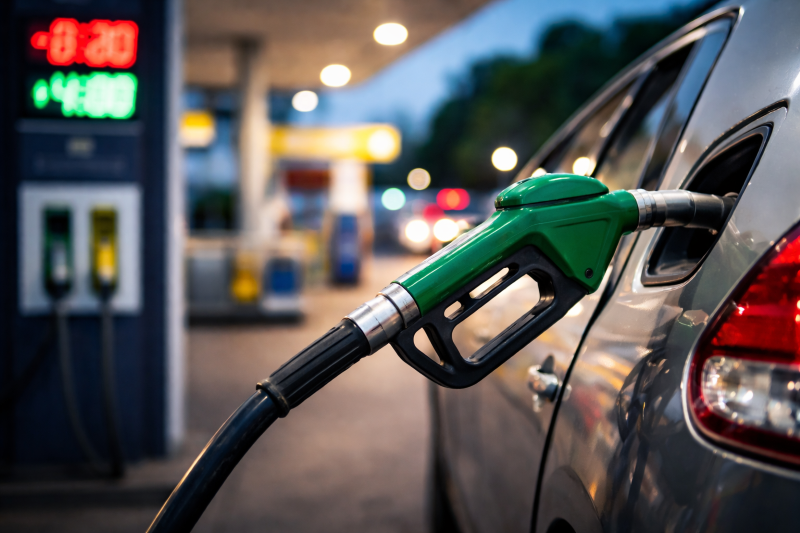
Fuel prices in India have been hiked for the second time in a week amid rising global tensions over the Middle East conflict.
According to reports, oil marketing companies increased petrol and diesel prices by around 90 paise per litre. A report by Moneycontrol stated that petrol became costlier by 87 paise per litre, while diesel prices rose by 91 paise per litre following the latest revision.
On May 15, petrol and diesel prices were increased by up to ₹3 per litre.
The latest hike comes as state-run oil marketing companies grapple with mounting pressure from elevated global crude prices and disrupted energy supply routes.
Meanwhile, the Ministry of Petroleum and Natural Gas on Monday issued an update on the country’s fuel supply situation, outlining measures being taken to ensure uninterrupted availability of petroleum products and LPG amid the evolving situation in West Asia.
Government preparedness and supply management measures
Despite ongoing geopolitical tensions, the government has ensured 100% supply to domestic LPG, PNG, and CNG (transport sectors).
For commercial LPG, priority has been given to essential sectors such as hospitals, educational institutions, pharmaceuticals, steel, automobile, agriculture, and seed industries. Additionally, supply of 5 kg free trade LPG cylinders (FTL) for migrant labour has been doubled based on average daily supply levels recorded in March 2026.
The government has implemented several rationalisation measures on both supply and demand sides, including increasing refinery output, extending the booking interval from 21 to 25 days in urban areas and up to 45 days in rural areas, and prioritising critical sectors for supply.
LPG supply status
LPG supply continues to be affected by the prevailing geopolitical situation, although domestic household supply has been prioritised.
No dry-outs have been reported at LPG distributorships. Online LPG cylinder bookings have increased to around 99% across the industry, while delivery authentication code (DAC)-based deliveries have reached about 95%, helping prevent diversion.
During the last four days, approximately 1.72 crore LPG cylinders were delivered against bookings of around 1.69 crore cylinders.
Commercial LPG supply and allocation
Total commercial LPG allocation has been increased to about 70% of pre-crisis levels, including a 10% reform-linked allocation.
Around 1.90 lakh 5-kg FTL cylinders were sold over the last four days. Since April 3, 2026, PSU oil marketing companies have conducted around 13,800 awareness camps promoting 5-kg FTL cylinders, through which more than 2.22 lakh cylinders have been sold.
On the previous day alone, around 2,229 cylinders were sold through approximately 95 camps.
A three-member committee of executive directors from IOCL, HPCL, and BPCL, in consultation with state authorities and industry bodies, is overseeing the distribution plan for commercial LPG across states and union territories.
Since May 2026, a total of 1,08,753 metric tonnes of commercial LPG has been sold. In the last four days alone, 25,204 metric tonnes were sold. During the same period, around 888 metric tonnes of auto LPG were also sold by PSU oil marketing companies.
Crude oil position and refinery operations
All refineries are operating at high capacity with adequate crude inventories, while sufficient stocks of petrol and diesel are being maintained across the country.
Domestic LPG production from refineries has been increased to support rising consumption. An inter-ministerial Joint Working Group (JWG) has also been set up to ensure adequate availability of petrochemical feedstock in the domestic market.
The government has permitted refinery and petrochemical companies to maintain minimum supplies of C3 and C4 streams for critical sectors, as identified by the Centre for High Technology (CHT).
Based on requests from the Department of Pharmaceuticals, Department of Chemicals and Petrochemicals (DCPC), and DPIIT, a provision of 1,120 MT/day from the LPG pool has been allocated to the pharma, chemical, and paint sectors.
Since May 1, 2026, more than 8,730 MT of C3-C4 molecules (propene and butene) and over 3,420 MT of butyl acrylate have been supplied from refineries in Mumbai, Kochi, Vizag, Chennai, Mathura, and Gujarat to the chemical, pharma, and paint industries.
Retail fuel availability and pricing measures
All retail fuel outlets are operating normally across the country, with adequate stocks of petrol and diesel available.
The government has stated that the Middle East crisis has led to abnormal increases in crude oil prices. To cushion the impact on consumers, excise duty on petrol and diesel has been reduced by ₹10 per litre.
Additionally, export levies have been revised: the duty on diesel has been reduced from ₹23 to ₹16.50 per litre, and on aviation turbine fuel (ATF) from ₹33 to ₹16 per litre. An export duty of ₹3 per litre has been imposed on petrol.
Authorities have reiterated that there is no shortage of fuel in the country and that supply remains stable.
Support Our Journalism
We cannot do without you.. your contribution supports unbiased journalism
IBNS is not driven by any ism- not wokeism, not racism, not skewed secularism, not hyper right-wing or left liberal ideals, nor by any hardline religious beliefs or hyper nationalism. We want to serve you good old objective news, as they are. We do not judge or preach. We let people decide for themselves. We only try to present factual and well-sourced news.
Support objective journalism for a small contribution.