Scientists predict life on Earth will end due to oxygen scarcity in one billion years: Study
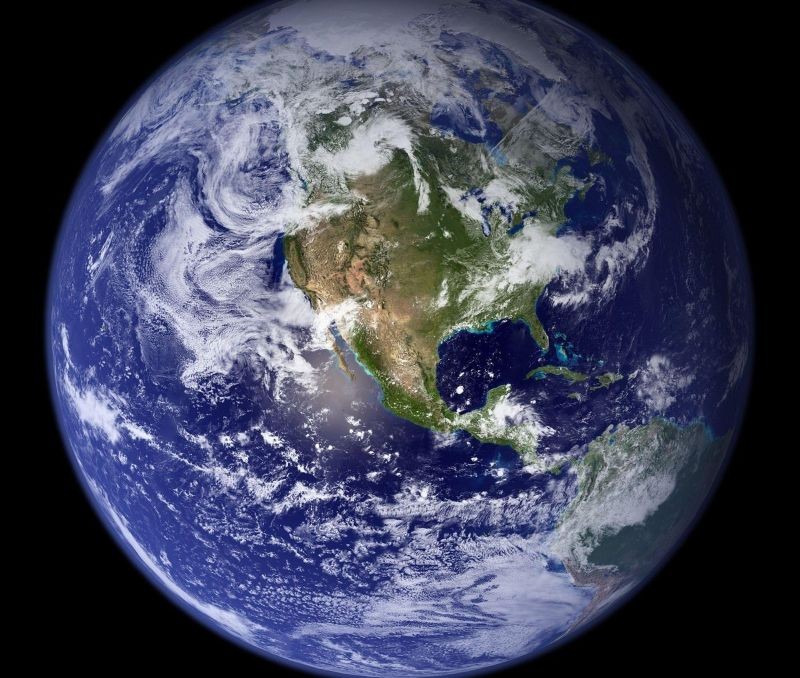
A supercomputer simulation study by researchers at Toho University, using NASA planetary modelling, had predicted that Earth's oxygen will disappear in approximately one billion years, making the existence of life impossible on the planet, said reports.
The study explored the likely evolution of Earth's atmosphere by running 400,000 simulations.
As the sun ages, it will become hotter and brighter, and affect Earth's climate.
It will lead to the evaporation of water, increase surface temperatures, while the carbon cycle will weaken, killing plants and halting oxygen production, the study said.
The atmosphere will revert to a state of high methane, reminiscent of early Earth before the Great Oxidation Event.
The study, published in Nature Geoscience, titled 'The future lifespan of Earth's oxygenated atmosphere', predicted that the future lifespan of Earth's oxygen-rich atmosphere is 1 billion years.
"For many years, the lifespan of Earth's biosphere has been discussed based on scientific knowledge about the steady brightening of the Sun and global carbonate-silicate geochemical cycle," Kazumi Ozaki, Assistant Professor at Toho University in Tokyo, Japan, said in a news release.
"One of the corollaries of such a theoretical framework is a continuous decline in atmospheric CO2 levels and global warming on geological timescales."
"It's generally thought Earth's biosphere will come to an end in 2 billion years due to the combination of overheating and CO2 scarcity for photosynthesis," Ozaki said.
"If true, one can expect atmospheric O2 levels will also eventually decrease in the distant future. However, it remains unclear exactly when and how this will occur."
While life could theoretically exist in such an atmosphere, it would be drastically different from what we know, Ozaki noted, adding that the new research narrows that timeframe, predicting rapid deoxygenation in one billion years.
Support Our Journalism
We cannot do without you.. your contribution supports unbiased journalism
IBNS is not driven by any ism- not wokeism, not racism, not skewed secularism, not hyper right-wing or left liberal ideals, nor by any hardline religious beliefs or hyper nationalism. We want to serve you good old objective news, as they are. We do not judge or preach. We let people decide for themselves. We only try to present factual and well-sourced news.
Support objective journalism for a small contribution.