 Indian Nuclear Achievement
Big leap in nuclear power: India’s 500 MWe Prototype Fast Breeder Reactor hits critical milestone!
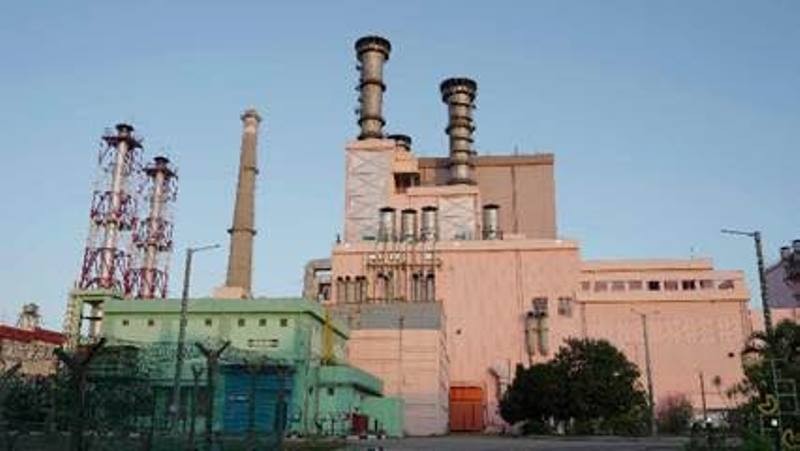
In a landmark milestone for India’s nuclear energy programme, the 500 MWe Prototype Fast Breeder Reactor (PFBR) achieved first criticality—the initiation of a controlled nuclear fission chain reaction—on April 6 at 8:25 PM.
The achievement marks a significant step toward ensuring long-term energy security and advancing the country’s indigenous nuclear technology capabilities.
The criticality was attained in the presence of Ajit Kumar Mohanty, Secretary, Department of Atomic Energy (DAE) and Chairman of the Atomic Energy Commission (AEC); Sreekumar G. Pillai, Director of Indira Gandhi Centre for Atomic Research (IGCAR); Allu Ananth, CMD-in-Charge of Bharatiya Nabhikiya Vidyut Nigam Limited; and K.V. Suresh Kumar, former CMD of BHAVINI. The milestone was reached after meeting all stipulations set by the Atomic Energy Regulatory Board (AERB), which granted clearance following a rigorous safety review.
Indigenous technology at the core
According to an official statement, the PFBR was indigenously designed and developed by IGCAR, a premier R&D centre under the DAE, and constructed and commissioned by BHAVINI, a public sector undertaking.
Fast Breeder Reactors are central to India’s long-term nuclear strategy. Unlike conventional thermal reactors, the PFBR uses Uranium-Plutonium Mixed Oxide (MOX) fuel.
How the PFBR works?
The reactor’s core is surrounded by a blanket of Uranium-238. Fast neutrons convert this fertile material into fissile Plutonium-239, enabling the reactor to generate more fuel than it consumes.
The PFBR is also designed to eventually utilise Thorium-232 in its blanket. Through transmutation, Thorium-232 can be converted into Uranium-233—fuel for the third stage of India’s nuclear power programme.
Boost to fuel efficiency and sustainability
The DAE highlighted that this unique capability significantly enhances the utilisation of nuclear fuel resources, allowing India to extract more energy from its limited uranium reserves while preparing for large-scale thorium use.
With the achievement of first criticality, India moves closer to realising the full potential of its three-stage nuclear power programme.
Bridging present and future nuclear technologies
Fast breeder technology serves as a crucial bridge between the existing fleet of pressurised heavy water reactors and the future deployment of thorium-based reactors, leveraging India’s abundant thorium resources for long-term clean energy generation.
“Achieving this milestone demonstrates the strength of India’s indigenous design, engineering and manufacturing ecosystem,” the Department said.
Advanced safety and engineering
The PFBR incorporates advanced safety systems, high-temperature liquid sodium coolant technology, and a closed fuel cycle approach. This enables the recycling of nuclear materials, improving sustainability and reducing waste.
The project reflects the efforts of numerous scientists, engineers, technicians, and industry partners who contributed to its design, fabrication, and construction using predominantly indigenous technologies.
Strengthening India’s strategic capabilities
Beyond energy generation, the fast breeder programme enhances India’s capabilities in nuclear fuel cycle technologies, advanced materials, reactor physics, and large-scale engineering.
The knowledge and infrastructure developed through this initiative are expected to support future reactor designs and next-generation nuclear technologies.
Towards a sustainable energy future
As India expands its clean energy portfolio, fast breeder reactors are set to play a key role in delivering reliable, low-carbon base-load power with higher thermal efficiency.
The attainment of first criticality is not just a technological breakthrough but also a major step toward a sustainable, self-reliant energy future aligned with the vision of Viksit Bharat.
Support Our Journalism
We cannot do without you.. your contribution supports unbiased journalism
IBNS is not driven by any ism- not wokeism, not racism, not skewed secularism, not hyper right-wing or left liberal ideals, nor by any hardline religious beliefs or hyper nationalism. We want to serve you good old objective news, as they are. We do not judge or preach. We let people decide for themselves. We only try to present factual and well-sourced news.
Support objective journalism for a small contribution.