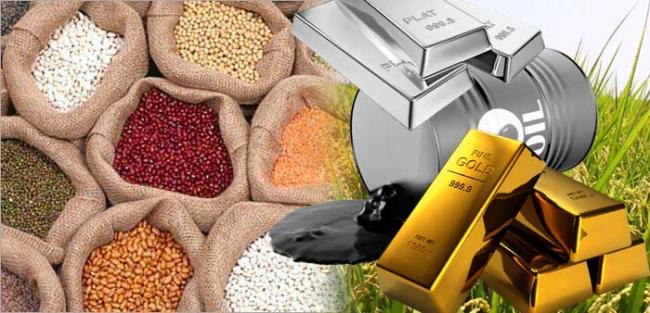
Optimistic Commodity Downturn May Soon Become a Disastrous Crash
For a while, this has been a good thing. Analysts in India were anxious to see prices drop, as it would help the country fight its fiscal deficit – but as the price of crude oil (and in turn, the price of everything else) seems to continue dropping, things are beginning to look a little bit more dire than expected.
It Starts and Stops at the Oil
The prices of commodities hang on the price of oil.At the beginning of last year, the price of a barrel of crude oil imported into India cost roughly US$36 – before it began falling, the price was still standing strong at over US$100 a barrel.
Steel and the major non-iron metals (aluminium, copper, lead, nickel, tin, and zinc) dropped in value as well.
China's Downturn
China is slowing down – an unprecedented event, since it hadn’t done that for decades. Being the major production powerhouse not just in the region, but the world, an economic slowdown in China is something felt around the globe with various consequences.
Since China is the world’s largest trading country for both imports and exports of metals, products, agriculture and fuel, a slowed rate of production and consumption in China points to further slowdown in the commodity markets. After all, China’s import/export totalled US$4.3 trillion according to the Chinese Ministry of Commerce, versus roughly US$3.9 trillion in the US according to Statista. But China alone can’t contribute enough to keep things as stale as they are – there’s more to it than that.
The Strengthening Dollar and the Price of Gold
For the first time in a while, the US is producing a good amount of its own oil. While it still largely imports fuel from Canada, the shale gas industry has largely strengthened the US economy while further causing the cost of crude oil to go into the dumps – and a stronger US dollar also leads to a weaker value for gold, as it pauses being a safe-haven commodity.
As the US demand for foreign oil drops, it also seems to seek alternatives in the renewables sector – although with nowhere as much fervour as it has been going at natural gas and local oil – and that doesn’t help the case for a barrel of crude. Amidst all this, Money Bhaskar, a local source forcommoditynews in Hindi,reports there may be a shake-up in order for the future of the commodity’s market.
What's does that Future Look Like?
While commodities are often lumped together, a dire trading situation calls for a clearer definition of asset classes. Metals and fuel may continue to drop in value, but the prices for crops continue to go up as the effects of climate change become more apparent with severe flooding and harsh droughts.
Furthermore, recent reports indicate a fall in US oil reserves – a boon for the value of crude oil, which is up to US$36.14 a barrel according to Oil-Price.net. If anything, the distinction between agriculture and industry will become more apparent as their prices split paths. But the future of 2016 remains wholly uncertain.
It Starts and Stops at the Oil
The prices of commodities hang on the price of oil.At the beginning of last year, the price of a barrel of crude oil imported into India cost roughly US$36 – before it began falling, the price was still standing strong at over US$100 a barrel.
Steel and the major non-iron metals (aluminium, copper, lead, nickel, tin, and zinc) dropped in value as well.
China's Downturn
China is slowing down – an unprecedented event, since it hadn’t done that for decades. Being the major production powerhouse not just in the region, but the world, an economic slowdown in China is something felt around the globe with various consequences.
Since China is the world’s largest trading country for both imports and exports of metals, products, agriculture and fuel, a slowed rate of production and consumption in China points to further slowdown in the commodity markets. After all, China’s import/export totalled US$4.3 trillion according to the Chinese Ministry of Commerce, versus roughly US$3.9 trillion in the US according to Statista. But China alone can’t contribute enough to keep things as stale as they are – there’s more to it than that.
The Strengthening Dollar and the Price of Gold
For the first time in a while, the US is producing a good amount of its own oil. While it still largely imports fuel from Canada, the shale gas industry has largely strengthened the US economy while further causing the cost of crude oil to go into the dumps – and a stronger US dollar also leads to a weaker value for gold, as it pauses being a safe-haven commodity.
As the US demand for foreign oil drops, it also seems to seek alternatives in the renewables sector – although with nowhere as much fervour as it has been going at natural gas and local oil – and that doesn’t help the case for a barrel of crude. Amidst all this, Money Bhaskar, a local source forcommoditynews in Hindi,reports there may be a shake-up in order for the future of the commodity’s market.
What's does that Future Look Like?
While commodities are often lumped together, a dire trading situation calls for a clearer definition of asset classes. Metals and fuel may continue to drop in value, but the prices for crops continue to go up as the effects of climate change become more apparent with severe flooding and harsh droughts.
Furthermore, recent reports indicate a fall in US oil reserves – a boon for the value of crude oil, which is up to US$36.14 a barrel according to Oil-Price.net. If anything, the distinction between agriculture and industry will become more apparent as their prices split paths. But the future of 2016 remains wholly uncertain.
Support Our Journalism
We cannot do without you.. your contribution supports unbiased journalism
IBNS is not driven by any ism- not wokeism, not racism, not skewed secularism, not hyper right-wing or left liberal ideals, nor by any hardline religious beliefs or hyper nationalism. We want to serve you good old objective news, as they are. We do not judge or preach. We let people decide for themselves. We only try to present factual and well-sourced news.