


Antarctic ice rift close to calving, after growing 17km in 6 days, says study
The rift in Larsen C is likely to lead to one of the largest icebergs ever recorded. It is being monitored by researchers from the UK's Project Midas, led by Swansea University.
Professor Adrian Luckman of Swansea University College of Science, head of Project Midas, described the latest findings: “In the largest jump since January, the rift in the Larsen C Ice Shelf has grown an additional 17 km (11 miles) between May 25 and May 31 2017. This has moved the rift tip to within 13 km (8 miles) of breaking all the way through to the ice front, producing one of the largest ever recorded icebergs."
The rift tip appears also to have turned significantly towards the ice front, indicating that the time of calving is probably very close.
The rift has now fully breached the zone of soft ‘suture’ ice originating at the Cole Peninsula and there appears to be very little to prevent the iceberg from breaking away completely.”
Researchers say the loss of a piece a quarter of the size of Wales will leave the whole shelf vulnerable to future break-up.
Larsen C is approximately 350m thick and floats on the seas at the edge of West Antarctica, holding back the flow of glaciers that feed into it.
Professor Luckman added:“When it calves, the Larsen C Ice Shelf will lose more than 10% of its area to leave the ice front at its most retreated position ever recorded; this event will fundamentally change the landscape of the Antarctic Peninsula.
We have previously shown that the new configuration will be less stable than it was prior to the rift, and that Larsen C may eventually follow the example of its neighbour Larsen B, which disintegrated in 2002 following a similar rift-induced calving event.
The MIDAS Project will continue to monitor the development of the rift and assess its ongoing impact on the ice shelf.
However, it is widely accepted that warming ocean and atmospheric temperatures have been a factor in earlier disintegrations of ice shelves elsewhere on the Antarctic Peninsula, most notably Larsen A (1995) and Larsen B (2002).
They point out that this is one of the fastest warming places on Earth, a feature which will certainly not have hindered the development of the rift in Larsen C.
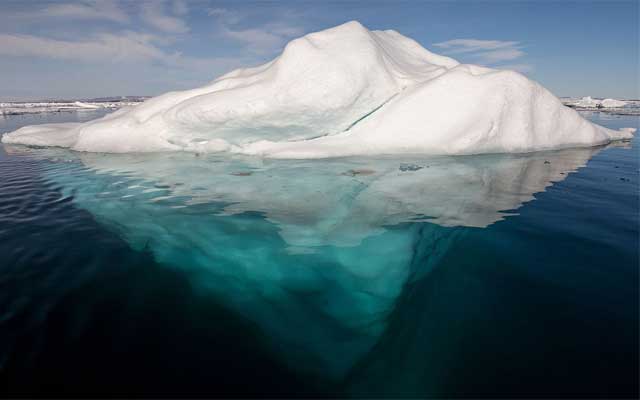
Image:Wikimedia commons
Support Our Journalism
We cannot do without you.. your contribution supports unbiased journalism
IBNS is not driven by any ism- not wokeism, not racism, not skewed secularism, not hyper right-wing or left liberal ideals, nor by any hardline religious beliefs or hyper nationalism. We want to serve you good old objective news, as they are. We do not judge or preach. We let people decide for themselves. We only try to present factual and well-sourced news.
Support objective journalism for a small contribution.


