


 HPV Vaccine
Big health push! PM Modi to launch nationwide HPV vaccine drive from Rajasthan tomorrow
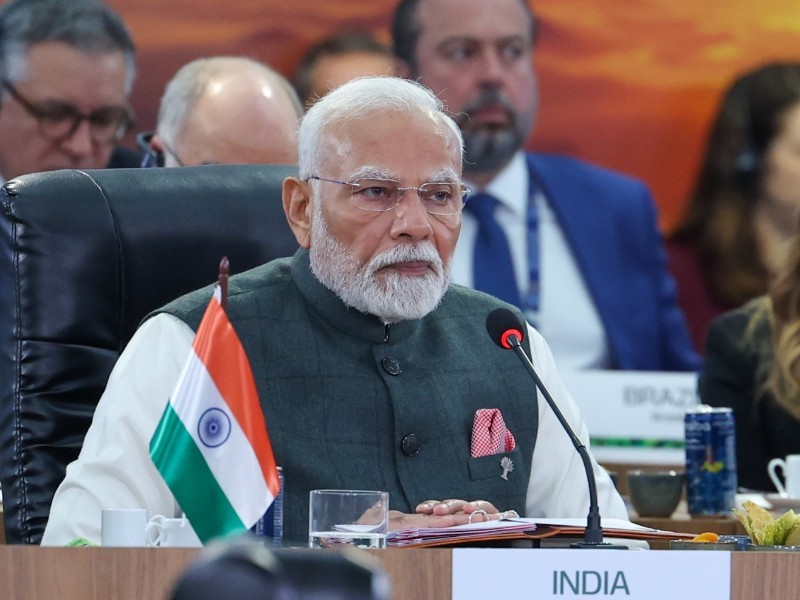
Indian PM Narendra Modi will launch the nationwide Human Papillomavirus (HPV) Vaccination Programme for 14-year-old girls on Saturday at 11:30 am from Ajmer, Rajasthan.
The nationwide rollout marks a significant milestone in India’s public health journey and fulfils the Government’s commitment to advancing the vision of “Swastha Nari” — placing prevention, protection, and equity at the core of women’s healthcare.
According to a government statement, the programme will target approximately 1.15 crore girls aged 14 years every year across all States and Union Territories. The vaccine will be provided free of cost at designated government health facilities.
Vaccination will be conducted at Ayushman Arogya Mandirs (Primary Health Centres), Community Health Centres, Sub-District and District Hospitals, as well as Government Medical Colleges and Hospitals. Each vaccination session will be supervised by trained Medical Officers and supported by skilled healthcare teams.
All vaccination sites will be equipped with functional Cold Chain Points (CCPs) and linked to 24×7 government health facilities to ensure immediate medical support and management of any rare Adverse Events Following Immunization (AEFI).
The vaccination drive will be voluntary, and informed consent from parents or guardians will be obtained prior to administration.
The special campaign will be implemented in mission mode over a three-month period, during which eligible girls can receive the vaccine daily at designated facilities. Thereafter, it will continue to be available on routine immunization days.
Cervical cancer remains the second most common cancer among women in India, with over 1.2 lakh new cases and nearly 80,000 deaths annually, according to GLOBOCAN 2022 data. Scientific evidence shows that nearly all cases are caused by persistent infection with high-risk types of Human Papillomavirus (HPV), particularly types 16 and 18, which account for more than 80 per cent of cervical cancer cases in India.
Despite being largely preventable through vaccination and early screening, cervical cancer continues to impose a heavy burden on families and the healthcare system. The nationwide HPV vaccination programme seeks to address this challenge by preventing HPV infection before it can progress to cancer.
India’s national programme will use Gardasil, a quadrivalent HPV vaccine that protects against HPV types 16 and 18 — responsible for cervical cancer — as well as types 6 and 11.
HPV vaccines are among the most extensively studied vaccines globally, with more than 500 million doses administered worldwide since 2006. Scientific evidence demonstrates 93–100 per cent effectiveness in preventing cervical cancer caused by vaccine-covered HPV types.
In June 2022, the Strategic Advisory Group of Experts (SAGE) on Immunization of the World Health Organization concluded that a single-dose schedule provides protection comparable to two-dose schedules. The December 2022 WHO Position Paper further endorsed single-dose schedules as an effective and programmatically advantageous option for girls aged 9–20 years.
India’s approach aligns with these global recommendations and the expert guidance of the National Technical Advisory Group on Immunization (NTAGI).
With this launch, India will join more than 160 countries that have introduced HPV vaccination into their national immunization programmes. Over 90 countries are already implementing single-dose HPV vaccination schedules, improving coverage, affordability, and programme efficiency.
Support Our Journalism
We cannot do without you.. your contribution supports unbiased journalism
IBNS is not driven by any ism- not wokeism, not racism, not skewed secularism, not hyper right-wing or left liberal ideals, nor by any hardline religious beliefs or hyper nationalism. We want to serve you good old objective news, as they are. We do not judge or preach. We let people decide for themselves. We only try to present factual and well-sourced news.
Support objective journalism for a small contribution.


