


Chandrayaan-2 lander Vikram had a 'hard landing': NASA
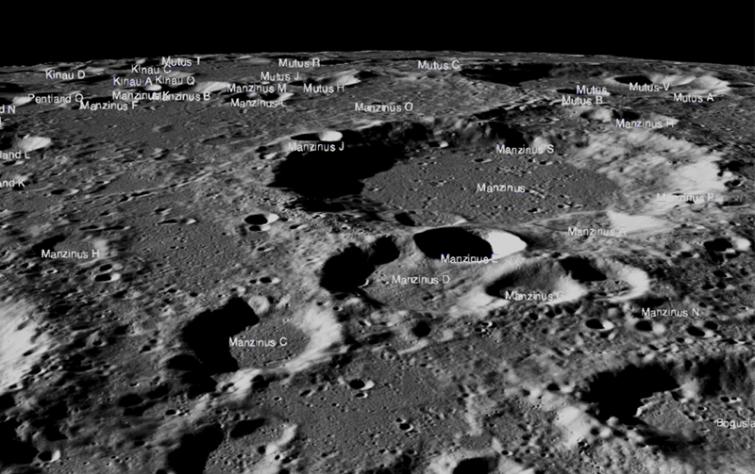
Washington, Sept 27 (IBNS): The Chandrayaan-2 lander, Vikram, attempted a landing on Sept 7 on a small patch of lunar highland smooth plains between Simpelius N and Manzinus C craters but it had a hard landing and the precise location of the spacecraft in the lunar highlands has yet to be determined, NASA said.
The lander, Vikram, was scheduled to touch down on Sept. 6 at 4:24 pm Eastern Daylight Time. This event was India's first attempt at a soft landing on the Moon, read the NASA website.
The site was located about 600 kilometers (370 miles) from the south pole in a relatively ancient terrain (70.8°S latitude, 23.5°E longitude). In order to visualize the site, take a quick fly-around.
The Lunar Reconnaissance Orbiter (LRO) passed over the landing site on Sept. 17 and acquired a set of high resolution images of the area; so far the LROC team has not been able to locate or image the lander.
It was dusk when the landing area was imaged and thus large shadows covered much of the terrain; it is possible that the Vikram lander is hiding in a shadow.
The lighting will be favorable when LRO passes over the site in October and once again attempts to locate and image the lander.
Image Credits: NASA/Goddard/Arizona State University
Support Our Journalism
We cannot do without you.. your contribution supports unbiased journalism
IBNS is not driven by any ism- not wokeism, not racism, not skewed secularism, not hyper right-wing or left liberal ideals, nor by any hardline religious beliefs or hyper nationalism. We want to serve you good old objective news, as they are. We do not judge or preach. We let people decide for themselves. We only try to present factual and well-sourced news.
Support objective journalism for a small contribution.


