


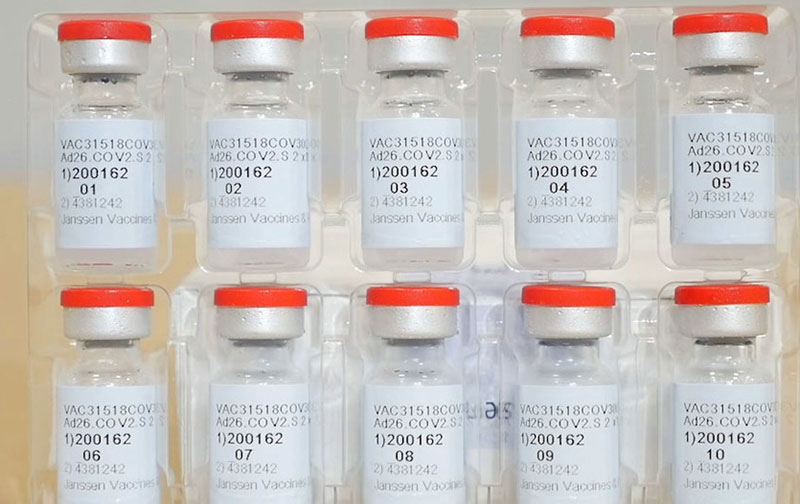
 Janssen
COVID-19: WHO says countries can now use one or two courses of the Janssen vaccine
Countries “can now consider” using one or two courses of the Janssen COVID-19 vaccine, otherwise known as the Johnson & Johnson, or J&J shot, the World Health Organization (WHO) announced on Friday.
The one-dose schedule is already authorized under the Emergency Use Listing Procedure, the agency explained in their updated recommendations, but now a second dose “may be appropriate”, the UN health agency said.
For WHO, in some circumstances, using one dose may have advantages.
Many countries face severe vaccine supply constraints, combined with a high disease burden.
In these cases, a single dose of the vaccine is efficacious and makes it possible to increase vaccine coverage rapidly, reducing the burden on health care systems.
A single dose may also be a preferred option for vaccinating hard-to-reach populations or populations living in conflict-effected settings.
Advantages of second dose
A second dose may be appropriate as vaccine supplies and accessibility increases.
Countries should offer a second dose beginning with the highest priority populations, such as healthcare workers, older people, or people with comorbidities, as indicated in the WHO Prioritization Roadmap.
The administration of the second dose will result in increased protection against symptomatic infection, and against severe disease.
COVID-19 vaccines from another platform that have received Emergency Use Listing authorization, known as heterologous vaccines, can also be considered for the second dose.
Countries can also consider a longer interval between doses.
A second dose two months after the initial dose substantially increases efficacy, especially against symptomatic infections, including when caused by variants of concern.
But an even longer interval between the two doses (six months rather than two months) has been shown to result in a larger increase in immune responses in adults. Countries could therefore consider an interval of up to six months based on their needs.
These recommendations were developed on the basis of advice issued by the Strategic Advisory Group of Experts (SAGE) on Immunization and the evidence summary included in the background document.
Support Our Journalism
We cannot do without you.. your contribution supports unbiased journalism
IBNS is not driven by any ism- not wokeism, not racism, not skewed secularism, not hyper right-wing or left liberal ideals, nor by any hardline religious beliefs or hyper nationalism. We want to serve you good old objective news, as they are. We do not judge or preach. We let people decide for themselves. We only try to present factual and well-sourced news.
Support objective journalism for a small contribution.


