


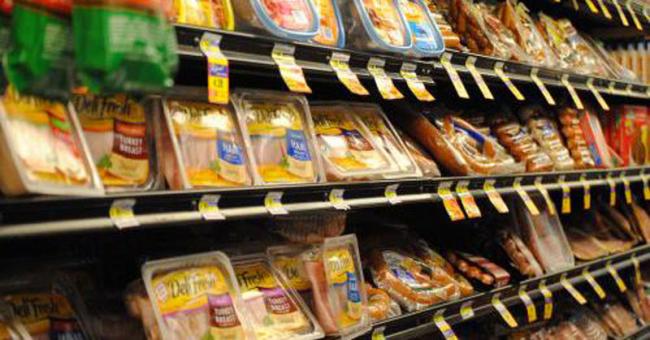
CSE wants FSSAI to ensure a robust labelling framework in India
New Delhi, Jun 14 (IBNS): The Centre for Science and Environment (CSE), a non-government organisation, has called for making the Food Safety and Standards (Labelling and Display) Regulations, 2018 more effective and stringent.
CSE was responding to the draft Regulations released for comments by the Food Safety and Standards Authority of India (FSSAI) in April, 2018.
They mandate compulsory labelling of salt and introduction of front-of-pack labelling.
CSE said it has submitted its recommendations to the FSSAI to ensure a robust labelling framework in India.
Chandra Bhushan, deputy director general, CSE, said, “A strict labelling law is very important to combat obesity and non-communicable diseases plaguing our country. Though this draft Regulation is a good beginning, it also has major gaps that need to be plugged to make it effective."
According to CSE, one of the significant gaps tin the draft Regulation is not provide for labelling of crucial aspects like added sugar and dietary fibres.
Amit Khurana, programme director, food safety and toxins unit, CSE, said, “Public health and nutrition experts recommend that it is best to avoid added sugar in food items. It can be measured and controlled and therefore, must be labelled. Also, dietary fibre is a key beneficial component of our diet and must also be labelled. This will help consumers make informed and healthy food choices."
The draft Regulation merely states that HFSS (high in fat, sugar or salt) food products shall not be advertised to children in any form. CSE researchers point out that this is not enough.
“Children are key consumers of HFSS food items and the burden of childhood obesity is rising," said Sonam Taneja, programme manager, food safety and toxins unit, CSE.
"The FSSAI needs to adopt a detailed framework to regulate advertisement of HFSS foods. Celebrities should not be allowed to endorse them and there should be no advertisement of certain food categories such as soft drinks. Broadcasting regulations should be developed to limit the exposure of children to food advertisements during prime time programmes," said Taneja.
The draft Regulation emphasises on providing nutrition information for each serving of a food item.
It also lays down that consumers should be made aware of the contribution of each serving to one’s daily quota of salt, sugar or fat. However, it does not standardise serving sizes.
“Determination of serving sizes has been left to the industry -- this is a big loophole," according to deputy director general Bhushan.
"We have seen that the food industry often claims very small serving sizes which are far from the reality and manipulates food labels. Serving sizes must be set by the FSSAI based on how much is customarily consumed by people in the Indian scenario,” said Bhushan.
The draft Regulation introduces labelling of genetically modified (GM) food. The FSSAI has been under the scanner for presence of GM food in India by way of import and otherwise, according to reports.
CSE has recommended that through the Regulation, the FSSAI must aim to regulate illegal GM food in India and should set a stricter bar for exemption from GM labelling -- the bar set in the draft Regulations is very weak.
“The FSSAI has a crucial role in ensuring food safety and a strong labelling regulation is a must to fulfil this mandate,” added Bhushan.
For more, please check the following links:
https://www.cseindia.org/notice-calling-for-suggestions-views-comments-etc-from-stakeholders-on-the-draft-food-safety-and-standards-labelling-and-display-regulations-2018--8786
Image: CSE/Twitter
Support Our Journalism
We cannot do without you.. your contribution supports unbiased journalism
IBNS is not driven by any ism- not wokeism, not racism, not skewed secularism, not hyper right-wing or left liberal ideals, nor by any hardline religious beliefs or hyper nationalism. We want to serve you good old objective news, as they are. We do not judge or preach. We let people decide for themselves. We only try to present factual and well-sourced news.
Support objective journalism for a small contribution.


