


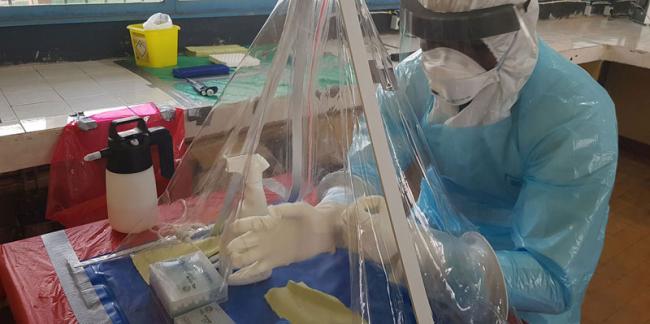
Death of Ebola patients who fled DRC hospital highlights dangers: WHO
New York, Mar 26 (IBNS): The escape of three patients infected with the Ebola virus in the Democratic Republic of the Congo (DRC) from the hospital where they were being treated is “not unexpected”, the World Health Organization (WHO) said on Friday, underlining the need to step up efforts to explain the dangers of the deadly disease to affected communities.
Two of the three patients died after leaving an isolation unit in Wangata hospital in Mbandaka city in the last week, WHO spokesperson Tarik Jasarevic confirmed.
He said that both of the deceased had been given a safe and dignified burial and added that “it was only human” that sick people wanted to be with their families “in what could be the last moments of life”.
“It is very unfortunate that people fled the treatment centre, but it is not unexpected. We had this in previous outbreaks,” he said.
“It is really important that we redouble our efforts to engage with the community so that everyone understands how Ebola is being transmitted, and that keeping the sick person at home not only decreases the chances of survival for this person, because this person then is not receiving supportive treatment, but is also putting at risk the whole family”, added Mr. Jasarevic.
Latest data from health authorities in the DRC, indicates a total of 52 cases of Ebola in the north-west of the country; 31 of these are confirmed, 13 are probable and eight are suspect.
But concerns are still high that the disease could spread easily from Mbandaka - a city of over a million people – given its direct link by river, to the capital, Kinshasa.There have been 22 deaths confirmed so far. The overall caseload and death toll have been revised downwards, reflecting the fact that some samples have either tested negative for the haemorrhagic disease, or that any link to Ebola has been ruled out.
The outbreak was originally declared on May 8 in Bikoro, a relatively remote region in Equateur Province.
Access there and to nearby Iboko is difficult and efforts are still ongoing to put in place a so-called “cold chain” to maintain Ebola vaccine at between minus 60 and minus 80 degrees Celsius.
Targeted vaccinations have already begun in Mbandaka and 154 people have been inoculated to date, according to Mr Jasarevic, who stressed that it would take time to identify all those who could have come into contact with an infected carrier.
“It’s targeted vaccination. It’s basically getting people who are identified as eligible to receive the vaccine; so contacts; and contacts of contacts…There are a number of challenges; first, epidemiological teams have to identify these people,” he added.
To date, WHO has shipped more than 7,500 vaccinations to DRC; a total of 300,000 are available from pharmaceuticals manufacturer Merck.
As in the previous Ebola outbreak in West Africa between 2014 and 2016, efforts are also under way in DRC to protect youngsters from the disease.
“Children are still at risk,” said Christophe Boulierac, spokesperson for UN Children’s Fund (UNICEF), who added that that staff are raising awareness of the dangers among 13,000 children in the three affected zones and installing handwashing facilities in more than 270 schools.
Measures are also in place to protect the mental well-being of youngsters, Boulierac continued, adding that other Ebola outbreaks had “demonstrated the need for social workers to identify and assist vulnerable children”.
A total of 22 psychosocial agents have been trained by UNICEF and partners, Boulierac said, adding that the agency is supporting 23 children and their families who have relatives infected with Ebola by supplying household kits and food rations.
WHO/OKA
Support Our Journalism
We cannot do without you.. your contribution supports unbiased journalism
IBNS is not driven by any ism- not wokeism, not racism, not skewed secularism, not hyper right-wing or left liberal ideals, nor by any hardline religious beliefs or hyper nationalism. We want to serve you good old objective news, as they are. We do not judge or preach. We let people decide for themselves. We only try to present factual and well-sourced news.
Support objective journalism for a small contribution.


