


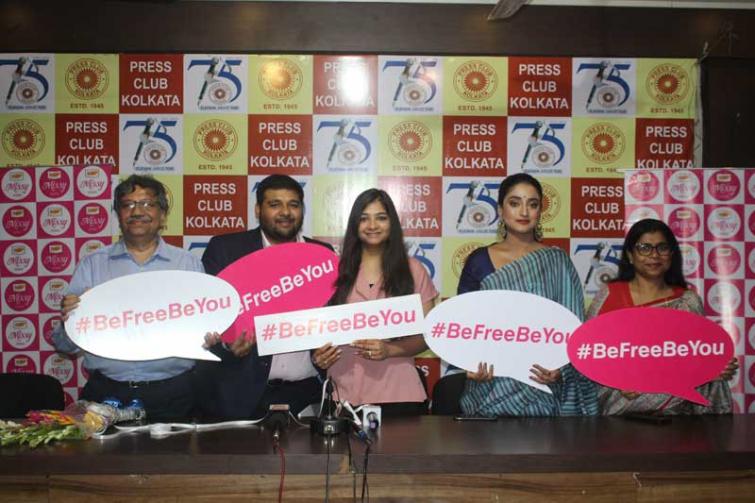
Dollar Industries and SEED to install sanitary napkin vending machines in schools under #BeFreeBeYou campaign
Kolkata, Aug 9 (IBNS): Dollar Industries Ltd and Society for Socio Economic and Ecological Development (SEED), an NGO, have collaborated to launch the #BeFreeBeYou campaign to improve awareness about menstrual hygiene among underprivileged adolescent girls.
As part of the campaign, they will install 100 sanitary napkin vending machine in government schools across West Bengal in the first phase.
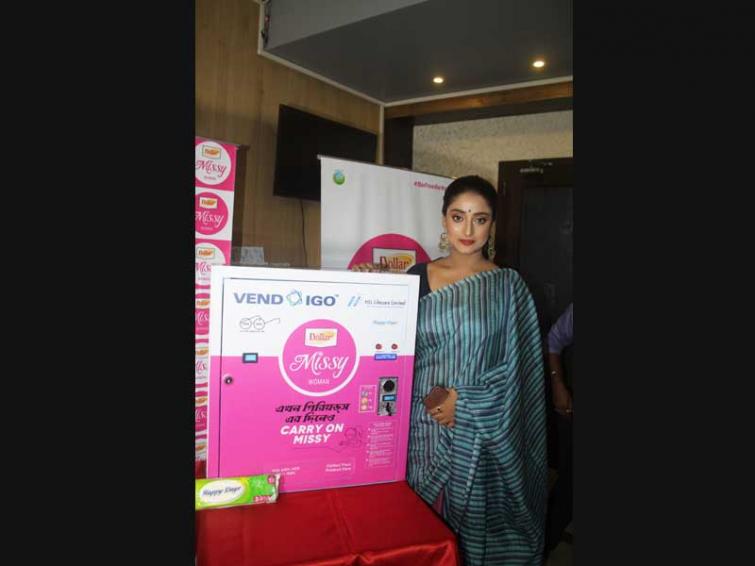
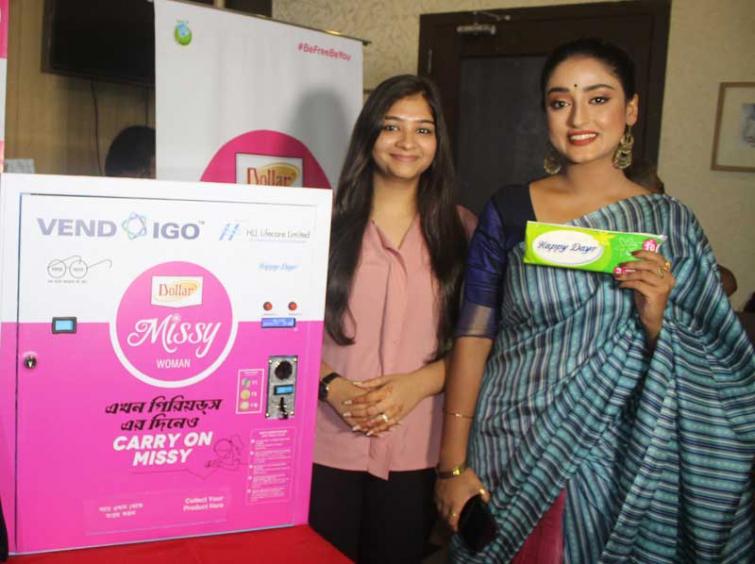
The #BeFreeBeYou campaign was launched by actress Debadrita Basu (the eponymous heroine of the Bengali mega serial 'Joyee'), along with the vice presidents of Dollar Industries Ltd -- Vedika Gupta and Ankit Gupta, and Dr. Somenath Bhattacharyya, Executive Director, SEED.
SEED has been working on menstrual hygiene management programmes with underprivileged adolescent girls and women across West Bengal and Jharkhand to break age old taboos.
The initiative aims at restricting school dropouts due to lack of proper menstrual hygiene management facilities.
It is noted that 23 million girls dropout school each year because of menstrual issue and non-availability of good quality sanitary napkins at nominal cost.
The initiative aims to educate girls about the taboos, myths and restrictions related to menstruation, wrong cultural practices and hygiene routine, enlighten girls to create awareness related to the physiology of menstruation and to impart knowledge about the proper use of sanitary napkins.
"#BeFreeBeYou is a passion project for us at Dollar," said Vedika Gupta.
She said, "A comparative study on menstrual hygiene for West Bengal undertaken in the recent past revealed that only a limited percentage of adolescent girls are aware of menstruation prior to attainment of menarche. While menstrual hygiene is lowest in eastern India with 83 per cent women saying their families cannot afford sanitary napkins. Thus, we decided to tie up with SEED for this initiative. We have plans to install 100 sanitary napkin vending machines across schools in West Bengal as the first phase of this initiative."
Said Dr. Somenath Bhattacharyya, "#BeFreeBeYou is a great initiative which will benefit scores of school children from the underprivileged strata of the society with regards to improved hygienic practices. This would help in taking a step forward to break the barriers of whispering about menstruation and would motivate the girls to share and care about healthy and hygienic practices. And above all, it will decrease the dropout percentage of the adolescent girls, which is very high due to inability of handling menstruation days properly. We are extremely thankful to have Dollar Missy Team on board who are equally enthusiastic to bring in a change in the lives of these girls."
A comparative research conducted by National Centre for Biotechnological Information (NCBI) shows only 37.52% girls are aware of menstruation prior to attainment of menarche.
According to a UNICEF study 51 per cent women in West Bengal are unaware about menstruation before menarche.
The difference in awareness regarding menstruation in urban and rural areas was highly significant.
Only 36 per cent girls in the urban and 54.88 per cent girls in rural areas use homemade sanitary pads and reuse the same sanitary pad for a period of time, which can lead to several deadly health issues like cervical cancer.
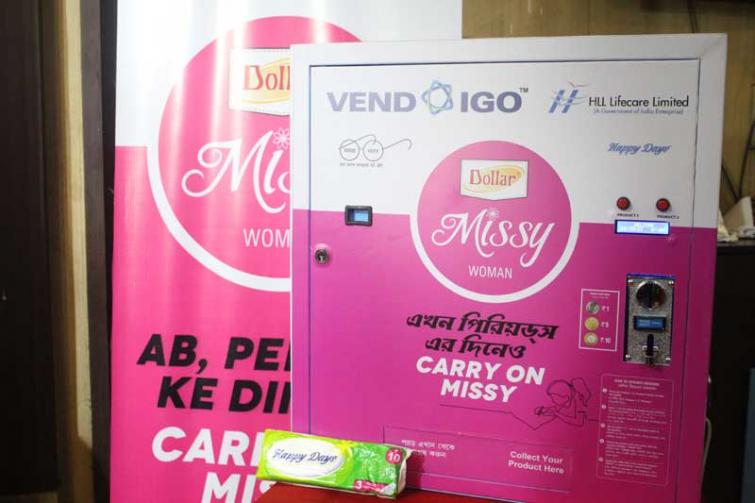
Ankit Gupta said that Dollar will provide assistance with sanitary napkin vending machines where the maximum holding capacity is 30 packs of pads at a time, and their team will go and refill so that the replenishment process goes on.
Students would be charged Rs 10 for a pack containing three sanitary napkins.
On being asked about the price charged, Vedika Gupta said it is an initiative to cultivate the habit of using sanitary napkins, and the whole amount would be utilised by the school authority to replenish the napkins.
Schools where the sanitary napkin vending machines will be installed as a pilot project are Kendua Mahendranath Girls High School, Sanghamitra Vidyalaya, Khidirpur Muslim High School, Lajpat Balika Vidyalaya, Jawahar Lal Nehru Balika Vidhyapith, Fatepur Hindi Nagari Pracharak Vidyalaya, Bansdroni Chakdah Vidyamandir, Dum Dum Road Govt. Sponsored High School for Girls, Sri Ramkrishna Sarada Sangha Balika Vidyalaya, Giribala Sircar Balika Vidyalaya School, Alipore Multipurpose Government Girls School, Badartala Madhyamik Balika Vidyamandir and The Oriental Seminary School.
(Reporting by Subhashish Roy. Images by Soumo Das)
Support Our Journalism
We cannot do without you.. your contribution supports unbiased journalism
IBNS is not driven by any ism- not wokeism, not racism, not skewed secularism, not hyper right-wing or left liberal ideals, nor by any hardline religious beliefs or hyper nationalism. We want to serve you good old objective news, as they are. We do not judge or preach. We let people decide for themselves. We only try to present factual and well-sourced news.
Support objective journalism for a small contribution.


