


From the colonies to the space race - past, present, future converge in Fourth Committee
New York, Dec 29 (IBNS): A timeline that stretches from the colonial past, through the present, and into the future for the final frontier in space, defines one of the United Nations General Assembly’s most versatile Main Committees – the Fourth Committee.
In this feature series on the work of the General Assembly – the UN body which comprises representatives from all 193 Member States – UN News takes an in depth look into the Fourth Committee.
While its official UN name sketches out its historic role, the agenda before the Special Political and Decolonization Committee, spells out the very diverse range of issues that it covers today.
Initially mandated to address decolonization in the post-World War Two era, the Fourth Committee took on “Special Political” responsibilities in the 1990’s, following the independence of most colonies and all the territories which began under the administration of the UN Trusteeship Council was complete.
That list of territories included Western Samoa, Tanganyika, Rwanda-Urundi, and what was then Togoland, which was split between British and French administration.
The Special Political remit, substantially broadened the scope of the Committee to include international cooperation in the peaceful uses of outer space, the comprehensive review of UN peacekeeping operations, as well as UN special political missions – which do not have uniformed peacekeepers on the ground. The committee even has the job of looking at ways to “revitalize” the work of the General Assembly.
The original decolonization role continues alongside the newer responsibilities, clearly indicating the Committee’s commitment to seeing the world’s remaining colonial territories liberated.
The Fourth Committee started its work on 4 October, following the conclusion of the annual high-level general debate of the General Assembly.
At its first meeting, the body elected Ambassador Dee‑Maxwell Saah Kemayah, Sr., the Permanent Representative of Liberia, as the Chair, and Faisal Nasser M. Alhakbani (Saudi Arabia), Dániel Goldea (Hungary), and Michael O’Toole (Ireland), as Vice-Chairs.
Luis Mauricio Arancibia Fernández (Bolivia) was elected the Rapporteur, tasked with preparing the report of the Committee.
In its meetings, the Committee was supported by the Fourth Committee secretariat, led by Secretary Sangeeta Sharma.
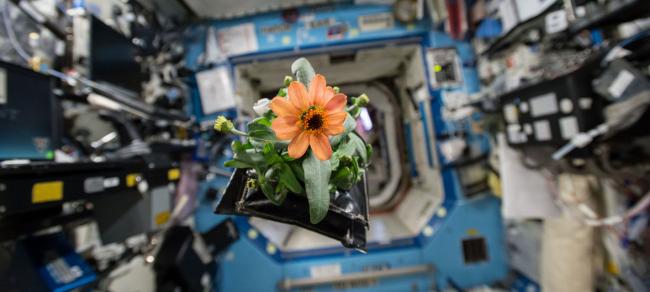
NASA/Johnson
Support Our Journalism
We cannot do without you.. your contribution supports unbiased journalism
IBNS is not driven by any ism- not wokeism, not racism, not skewed secularism, not hyper right-wing or left liberal ideals, nor by any hardline religious beliefs or hyper nationalism. We want to serve you good old objective news, as they are. We do not judge or preach. We let people decide for themselves. We only try to present factual and well-sourced news.
Support objective journalism for a small contribution.


