


Governments should place more emphasis on drug treatment and rehabilitation, says UN-backed narcotics control board
New York, Mar 2 (JEN): Governments are being urged to invest more in drug treatment and rehabilitation rather than just focusing solely on prevention, the latest report by the International Narcotics Control Board (INCB) recommends.
The study, published on Thursday, reveals that only one in six people globally who needs treatment has access to these services.
Further, even where treatment is available, the quality often is poor or not in line with international standards.
“Our report shows that treatment of drug dependence is highly cost-effective and, most importantly, treatment of drug dependence should be seen as part of the ‘right of everyone to the enjoyment of the highest attainable standard of physical and mental health,’ and as such, an element of the right to health,” INCB president Viroj Sumyai said in a message included in the report.
The INCB is an independent quasi-judicial body which monitors implementation of three United Nations international drug control conventions.
In addition to pressing for more government action in the areas of treatment, rehabilitation and reintegration, it is calling for attention to be paid to “special populations” such as women, migrants and refugees.
The report also highlights the need for the global community to support Afghanistan, where illicit opium production and opium poppy cultivation hit a record high last year.
The Afghanistan Opium Survey 2017, produced by the UN Office on Drugs and Crime (UNODC) and the country’s Ministry of Counter Narcotics, shows opium production reached 9,000 metric tonnes: a nearly 90 per cent increase over 2016 figures.
The INCB also emphasizes the need to address the global gap in access to controlled narcotic drugs and psychotropic substances for medicinal and scientific purposes.
This “global pain divide” disproportionately impacts low- and middle-income countries, according to the body.
The INCB notes that 2018 marks several anniversaries, including 70 years since the proclamation of the Universal Declaration of Human Rights.
Considered a “milestone document” by the UN, the Declaration recognizes the inherent dignity of all human beings.
“In this context, INCB once again calls on countries to ensure that any drug control measures are in full compliance with international human rights standards and norms,” according to a press release from the organization.
“This includes protecting and guaranteeing the rights to health, the rights of alleged drug offenders, and drug users and ensuring proportional responses in dealing with drug offences, including abolishing the death penalty for drug-related offences. The Board also reiterates its strong condemnation of extrajudicial responses to drug-related criminality.”
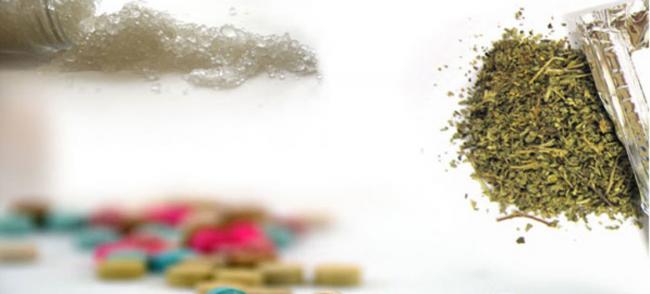
Photos: Central Narcotics Bureau, Singapore: University Medical Center Freiburg, Germany; UNODC. Please note that the products (pills and bathsalt) shown in the photos are simulated.
Support Our Journalism
We cannot do without you.. your contribution supports unbiased journalism
IBNS is not driven by any ism- not wokeism, not racism, not skewed secularism, not hyper right-wing or left liberal ideals, nor by any hardline religious beliefs or hyper nationalism. We want to serve you good old objective news, as they are. We do not judge or preach. We let people decide for themselves. We only try to present factual and well-sourced news.
Support objective journalism for a small contribution.


