


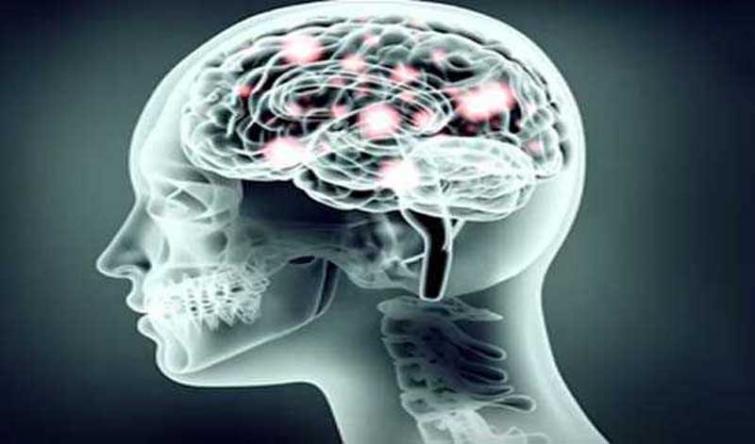
Human brains reorganise experiences while resting to find new solutions: Study
London, July 9 (IBNS): Researchers have found coherent chains of activity in human brains during rest, which may be important substrates of our powerful reasoning abilities.
Although computers are making impressive strides in learning, humans still learn orders of magnitude faster. Humans are particularly good at using generalisations from past experiences to make broad assumptions when they are faced with little information about new experiences.
In a new study, researchers from the University of Oxford, UCL and DeepMind, looked at whether such abstract knowledge affects how we approach new experiences.
It is thought that making these inferences relies on the models of the world that we create in our mind during everyday experiences, which use the same neural mechanisms (and brain cells) that help us understand our position relative to other objects and places.
Although predominantly encoding our current location, these brain cells also spontaneously recall old memories, and explore new possibilities – a phenomenon known as “replay”.
The researchers trained participants in a task defining an ordering of everyday objects, and then presented a new set of familiar objects in a scrambled order - during which they applied MEG neuroimaging to map brain activity in the participants.
They observed that representations of the new objects were reactivated during subsequent rest. These 'replay' events occurred much faster than in their actual experience.
Human replay occurs while the brain is resting between exercises, and reverses direction after a reward has been given for making the correct choice.
They also showed that human replay spontaneously reorganises experience based on learnt structure. This enables us to spontaneously re-order sequences to integrate past knowledge with current experiences.
Professor Timothy Behrens of Oxford’s Nuffield Department of Clinical Neurosciences, who was involved in the research, said: ‘Replay plays out events in a different order to the order they were seen in, which is a sophisticated jump for the brain to make.
‘A defining feature of human intelligence is the ability to make strong inferences on the basis of sparse observations. If you notice your husband’s wallet on the kitchen table, you immediately know he is more likely to be in the garden than the pub. It is completely unknown how such inferences are performed in our brains, but our research suggests an important role for replay.
‘Our ability to use prior knowledge to reorder events allows experiences to be sampled out of order and reconfigured flexibly later.
They also found that replay is factorised - that is, multiple representations of different aspects of events are replayed simultaneously, and these different representations can be recombined to make new events.
This is important because factorised representations are a powerful means of generalising knowledge.
‘With factorised representations, individual experiences can be decomposed into parts and these parts can be meaningfully recombined in a vast number of ways – which has the potential to dramatically improve learning,’ said lead author Yunzhe Liu, a PhD student in the Max Planck UCL Centre for Computational Psychiatry & Ageing Research and Wellcome Centre for Human Neuroimaging at UCL.
‘Factorized replay provides powerful computational efficiencies that may facilitate inferences and generalisations in a broad array of cognitive tasks,’ he added.
Support Our Journalism
We cannot do without you.. your contribution supports unbiased journalism
IBNS is not driven by any ism- not wokeism, not racism, not skewed secularism, not hyper right-wing or left liberal ideals, nor by any hardline religious beliefs or hyper nationalism. We want to serve you good old objective news, as they are. We do not judge or preach. We let people decide for themselves. We only try to present factual and well-sourced news.
Support objective journalism for a small contribution.


