


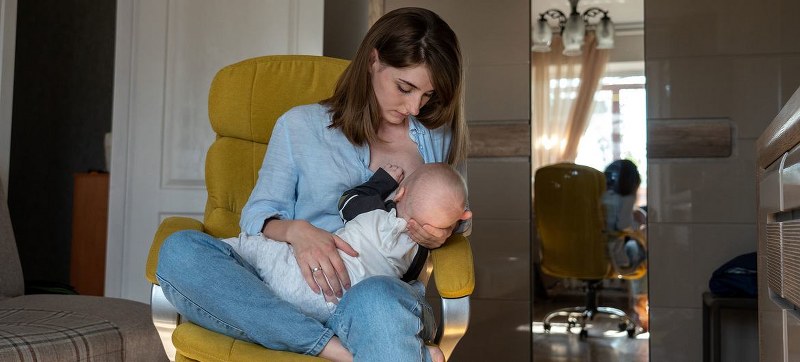
 Breastfeeding
‘Let’s make breastfeeding at work, work’, urge UN agencies
New York: United Nations agencies on Tuesday kicked off World Breastfeeding Week, emphasizing the need for greater breastfeeding support across all workplaces.
In the last decade, the prevalence of exclusive breastfeeding has increased by a remarkable 10 percentage points, to 48 per cent globally, according to the UN Children’s Fund (UNICEF) and the World Health Organization (WHO).
Promoting and supporting breastfeeding at workplaces can help drive the progress higher and towards the global target of 70 per cent by 2030, they said.
“Supportive workplaces are key. Evidence shows that while breastfeeding rates drop significantly for women when they return to work, that negative impact can be reversed when workplaces facilitate mothers to continue to breastfeed their babies,” Catherine Russell, UNICEF Executive Director, and Tedros Adhanom Ghebreyesus, WHO Director-General, said in a statement.
Good for mothers, babies, and businesses
Family-friendly workplace policies, such as paid maternity leave, breastfeeding breaks and a room where mothers can breastfeed or express milk, create an environment that benefits not only working women and their families but also employers, the UN officials said.
“These polices generate economic returns by reducing maternity-related absenteeism, increasing the retention of female workers, and reducing the costs of hiring and training new staff,” they added.
Highlighting the benefits of supporting breastfeeding for mothers, babies and businesses, UNICEF and WHO urged governments, donors, civil society, and the private sector to support all working mothers – including those in the informal sector or on temporary contracts.
The UN agencies also called for sufficient paid leave for all working parents and caregivers to meet the needs of their young children, as well as increased investments in breastfeeding support policies and programmes in all settings.
Ultimate child survival intervention
The health benefits of breastfeeding are based on scientific fact and are well documented.
From the earliest moments of a child’s life, breastfeeding is the ultimate child survival and development intervention. It protects babies from common infectious diseases and boosts children’s immune systems, providing the key nutrients children need to grow and develop to their full potential.
WHO and UNICEF recommend that breastfeeding should begin within the first hour of birth and continued through the first six months of a child’s life – meaning no other foods or liquids are provided, including water.
They also recommend that infants should be breastfed on demand – that is as often as the child wants, day and night.
From the age of six months, children should begin eating safe and adequate complementary foods while continuing to breastfeed for up to two years of age or beyond.
Support Our Journalism
We cannot do without you.. your contribution supports unbiased journalism
IBNS is not driven by any ism- not wokeism, not racism, not skewed secularism, not hyper right-wing or left liberal ideals, nor by any hardline religious beliefs or hyper nationalism. We want to serve you good old objective news, as they are. We do not judge or preach. We let people decide for themselves. We only try to present factual and well-sourced news.
Support objective journalism for a small contribution.


