


No more plastic in the ocean?
Tel Aviv, Dec 26 (IBNS): According to the United Nations, plastic accounts for up to 90 percent of all the pollutants in our oceans, yet there are few comparable, environmentally friendly alternatives to the material.
Now, a new Tel Aviv University study describes a process to make bioplastic polymers that don't require land or fresh water — resources that are scarce in much of the world.
The polymer is derived from microorganisms that feed on seaweed. It is biodegradable, produces zero toxic waste and recycles into organic waste.
The invention was the fruit of a multidisciplinary collaboration between Dr. Alexander Golberg of TAU's Porter School of Environmental and Earth Sciences and Prof. Michael Gozin of TAU's School of Chemistry. Their research was recently published in the journal Bioresource Technology.
Using seaweed as "fuel" for decontamination
"Plastics take hundreds of years to decay. So bottles, packaging and bags create plastic 'continents' in the oceans, endanger animals and pollute the environment," says Dr. Golberg. "Plastic is also produced from petroleum products, which has an industrial process that releases chemical contaminants as a byproduct.
"A partial solution to the plastic epidemic is bioplastics, which don't use petroleum and degrade quickly. But bioplastics also have an environmental price: To grow the plants or the bacteria to make the plastic requires fertile soil and fresh water, which many countries, including Israel, don't have. Our new process produces 'plastic' from marine microorganisms that completely recycle into organic waste."
The researchers harnessed microorganisms that feed on seaweed to produce a bioplastic polymer called polyhydroxyalkanoate (PHA). "Our raw material was multicellular seaweed, cultivated in the sea," Dr. Golberg says. "These algae were eaten by single-celled microorganisms, which also grow in very salty water and produce a polymer that can be used to make bioplastic.
Fighting pollution without using fresh water
"There are already factories that produce this type of bioplastic in commercial quantities, but they use plants that require agricultural land and fresh water. The process we propose will enable countries with a shortage of fresh water, such as Israel, China and India, to switch from petroleum-derived plastics to biodegradable plastics."
According to Dr. Golberg, the new study could revolutionize the world's efforts to clean the oceans, without affecting arable land and without using fresh water. "Plastic from fossil sources is one of the most polluting factors in the oceans," he says. "We have proved it is possible to produce bioplastic completely based on marine resources in a process that is friendly both to the environment and to its residents.
"We are now conducting basic research to find the best bacteria and algae that would be most suitable for producing polymers for bioplastics with different properties," he concludes.
The research was partially funded by the TAU-Triangle Regional R&D Center in Kfar Kara under the academic auspices of Tel Aviv University, and by the Israeli Ministry of Energy and Infrastructures.
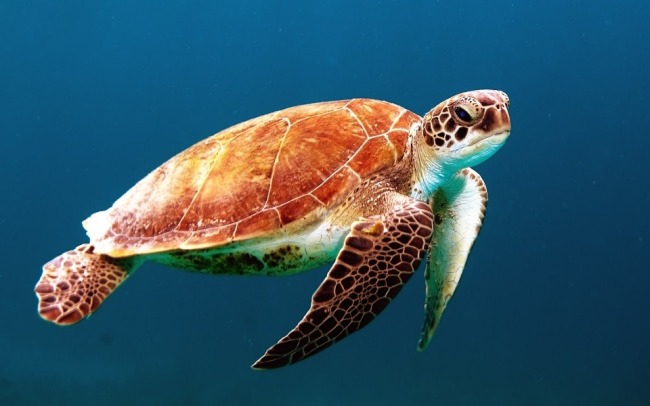
Internet wallpapaer image
Support Our Journalism
We cannot do without you.. your contribution supports unbiased journalism
IBNS is not driven by any ism- not wokeism, not racism, not skewed secularism, not hyper right-wing or left liberal ideals, nor by any hardline religious beliefs or hyper nationalism. We want to serve you good old objective news, as they are. We do not judge or preach. We let people decide for themselves. We only try to present factual and well-sourced news.
Support objective journalism for a small contribution.


