


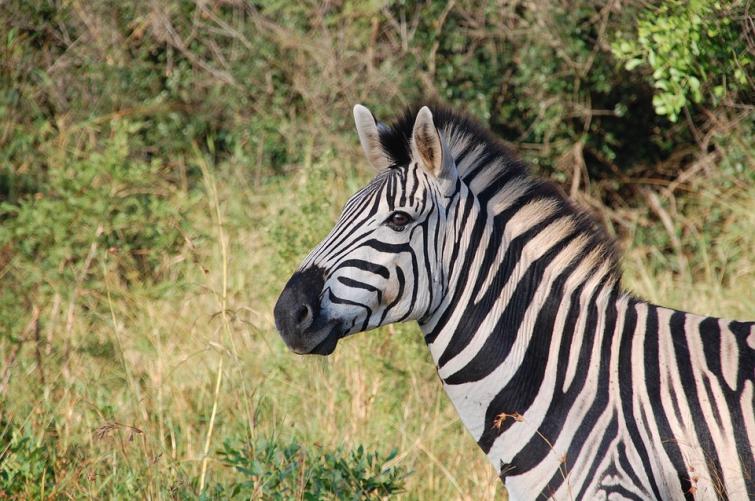
Scientists find zebra odour useful in fight against trypanosomosis disease
Nairobi, Jul 2 (Xinhua) Researchers in Kenya have found that specific odours in zebra skin can provide leads to boost the management of the deadly trypanosomiasis disease, which is transmitted by tsetse flies to people and livestock.
The scientists at the Nairobi-based International Center of Insect Physiology and Ecology (ICIPE) established that zebras produce certain scents that repel tsetse flies.
"We also found that a blend of three of these odours enhances the effectiveness of existing tsetse management tools, including the ICIPE tsetse repellent collar technology," said Olabimpe Olaide, a Nigerian scholar at ICIPE.
Found only in Africa, tsetse flies are one of the major constraints to livestock and agricultural production, land use, nutrition, incomes, and overall development in the continent, with some areas abandoned due to the pests.
Control of the flies with synthetic insecticides is expensive for livestock keepers and harmful to people, livestock and the environment.
"Previous research has shown that tsetse flies avoid, and hardly bite zebras, even though the animals are commonly present in areas infested by the pests. Until now, the reason for this evasion has been unclear, with speculations that the zebras' stripped skin is a contributing factor," said Olaide, who did the study as part of her PhD research.
She noted that the zebra stripes are only visible to tsetse flies at about five meters and 10 meters, but beyond this distance, they appear uniformly grey to the flies.
In some similar research years back, scientists found that the waterbuck is also repellent to tsetse flies.
The highly successful tsetse repellent collar technology exploits chemical signals obtained from the waterbuck.
A blend of these chemicals has been packaged in innovative dispensers which, when worn as collars around the neck of cattle, essentially makes animals unattractive to tsetse flies.
"In comparison to the waterbuck repellent, the chemical blend identified from zebras appears to offer a comparable, longer lasting and more affordable alternative," said Baldwyn Torto, head of ICIPE's Behavioural and Chemical Ecology Unit.
The researchers do not rule out the possibility of the zebra stripes as a factor in driving away tsetse flies.
Therefore, they noted that future studies will explore this likelihood, as well as other visual and odour cues from zebra breath, urine and dung, towards creating an integrated novel strategy to manage tsetse flies.
"From a broader perspective, this study strengthens the case for the conservation of Africa's wildlife. The value of this rich heritage to the continent - for example its critical role in tourism - is already well-established. But these findings add another dimension; the indispensable function of wildlife in ecosystems, and the amazing possibilities they harbour for the survival of human beings," said Torto.
According to the Kenya Tsetse and Trypanosomiasis Eradication Council, tsetse flies also known as "poverty insects" are in many Africa's poorest regions.
In Kenya, tsetse flies occupy 138,000 square kilometers, approximately 23 percent of the country, in 38 out of 47 counties with a total human population of about 11 million at risk of infection.
Support Our Journalism
We cannot do without you.. your contribution supports unbiased journalism
IBNS is not driven by any ism- not wokeism, not racism, not skewed secularism, not hyper right-wing or left liberal ideals, nor by any hardline religious beliefs or hyper nationalism. We want to serve you good old objective news, as they are. We do not judge or preach. We let people decide for themselves. We only try to present factual and well-sourced news.
Support objective journalism for a small contribution.


