


Smartphones may be used to better predict the weather: Study
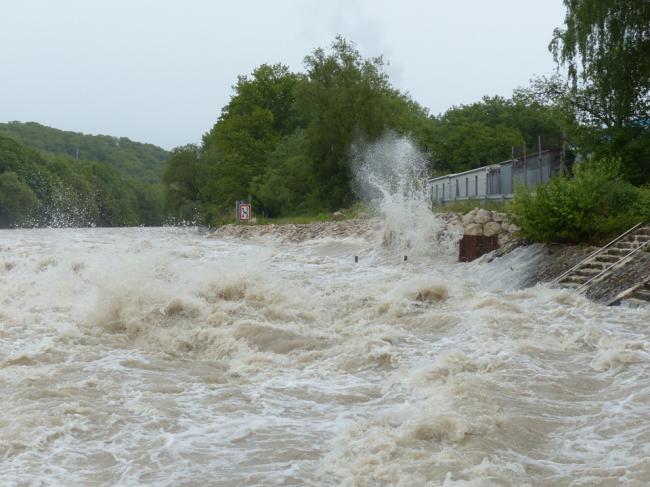
Tel Aviv, Nov 12 (IBNS): Flash floods occur with little warning. Earlier this year, a flash flood that struck Ellicott City, MD, demolished the main street, swept away parked cars, pummeled buildings and left one man dead.
A recent Tel Aviv University study suggests that weather patterns that lead to flash floods may one day be tracked and anticipated by our smartphones.
"The sensors in our smartphones are constantly monitoring our environment, including gravity, the earth's magnetic field, atmospheric pressure, light levels, humidity, temperatures, sound levels and more," said Prof. Colin Price of TAU's Porter School of the Environment and Earth Sciences, who led the research. "Vital atmospheric data exists today on some 3 to 4 billion smartphones worldwide. This data can improve our ability to accurately forecast the weather and other natural disasters that are taking so many lives every year."
Prof. Price collaborated with TAU master's student Ron Maor and TAU doctoral student Hofit Shachaf for the study, which was published in the Journal of Atmospheric and Solar-Terrestrial Physics.
Smartphones measure raw data, such as atmospheric pressure, temperatures and humidity, to assess atmospheric conditions. To understand how the smartphone sensors work, the researchers placed four smartphones around TAU's expansive campus under controlled conditions and analyzed the data to detect phenomena such as "atmospheric tides," which are similar to ocean tides. They also analyzed data from a UK-based app called WeatherSignal.
"By 2020, there will be more than six billion smartphones in the world," Prof. Price said. "Compare this with the paltry 10,000 official weather stations that exist today. The amount of information we could be using to predict weather patterns, especially those that offer little to no warning, is staggering.
"In Africa, for example, there are millions of phones but only very basic meteorological infrastructures. Analyzing data from or 10 phones may be of little use, but analyzing data on millions of phones would be a game changer. Smartphones are getting cheaper, with better quality and more availability to people around the world."
The same smartphones may be used to provide real-time weather alerts through a feedback loop, Prof. Price said. The public can provide atmospheric data to the "cloud" via a smartphone application. This data would then be processed into real-time forecasts and returned to the users with a forecast or a warning to those in danger zones.
The study may lead to better monitoring and predictions of hard-to-predict flash floods. "We're observing a global increase in intense rainfall events and downpours, and some of these cause flash floods," Prof. Price said. "The frequency of these intense floods is increasing. We can't prevent these storms from happening, but soon we may be able to use the public's smartphone data to generate better forecasts and give these forecasts back to the public in real time via their phones."
Support Our Journalism
We cannot do without you.. your contribution supports unbiased journalism
IBNS is not driven by any ism- not wokeism, not racism, not skewed secularism, not hyper right-wing or left liberal ideals, nor by any hardline religious beliefs or hyper nationalism. We want to serve you good old objective news, as they are. We do not judge or preach. We let people decide for themselves. We only try to present factual and well-sourced news.
Support objective journalism for a small contribution.


