


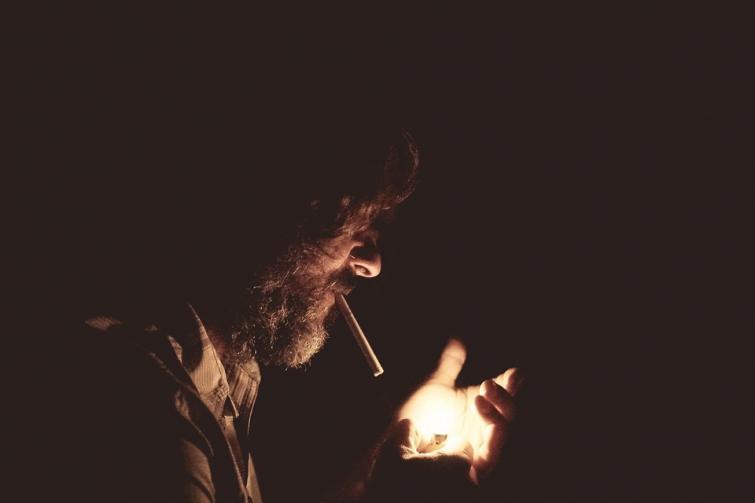
Study shows heavy smoking can have a damaging effect on facial ageing
London/IBNS: Heavy smoking may have a causal effect on facial ageing, according to new research led by the University of Bristol.
The study searched across 18,000 traits from the UK Biobank cohort to identify those that may be affected by how heavily someone smokes.
As well as recognising several known adverse effects such as on lung health, the research also found heavy smoking could influence appearance.
The study, published in PLOS Genetics, was led by the University’s MRC Integrative Epidemiology Unit (IEU) and also supported by the NIHR Bristol Biomedical Research Centre (BRC).
The researchers wanted to demonstrate a new approach that could be used to systematically test for causal effects across thousands of outcomes, by combining two existing methods: the Mendelian randomization phenome-wide association study approach and gene-by-environment interaction tests. To test their new method, the Bristol team searched for the effects of heavy smoking using the UK Biobank cohort.
The research team found their approach worked, as their results included several known effects of heavier smoking e.g. on lung function. They also identified an interesting potential effect of heavier smoking on more facial ageing.
Their finding adds to evidence that found heavier smoking affects facial attractiveness and the amount of wrinkling, which might be reasons to encourage someone to stop smoking or deter them from starting in the first place.
By showing that the approach works, it could be used to search for the effects of other exposures, such as alcohol intake.
Dr Louise Millard, Vice Chancellor's Research Fellow in the Bristol Medical School: Population Health Sciences (PHS) who led the research, said: "We proposed a novel approach that could be used to search for causal effects of health exposures, and demonstrated this approach to search for the effects of smoking heaviness. We searched across thousands of traits to identify those that may be affected by how heavily someone smokes. As well as identifying several known adverse effects such as on lung health, we also identified an adverse effect of heavier smoking on facial aging."
Mendelian randomization is a technique that uses genetic variation in a person’s DNA to help understand the causal relationships between risk factors and health outcomes – here whether how heavily someone smokes causally affects health outcomes.
However, Mendelian randomization is biased if the genetic variant also affects the outcome via other pathways. The research team used additional information – that the effect of heavy smoking only occurs in people who actually smoke – to overcome this problem. By testing associations in ever and never smokers separately they were able to assess whether the genetic variant affects an outcome via smoking or another pathway. If the effect is at least partially via smoking heaviness, the researchers would expect the effect to differ in ever versus never smokers, and this would suggest that smoking causally influences the outcome.
Further work is needed to find out whether being told that smoking could affect appearance is an effective strategy for smoking prevention or stopping.
Support Our Journalism
We cannot do without you.. your contribution supports unbiased journalism
IBNS is not driven by any ism- not wokeism, not racism, not skewed secularism, not hyper right-wing or left liberal ideals, nor by any hardline religious beliefs or hyper nationalism. We want to serve you good old objective news, as they are. We do not judge or preach. We let people decide for themselves. We only try to present factual and well-sourced news.
Support objective journalism for a small contribution.


