


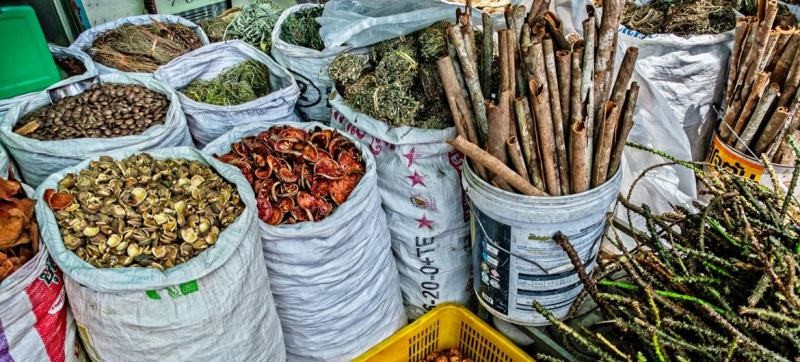
 Traditional Medicines
Traditional medicine takes center stage! WHO reveals a worldwide wellness boom!
The vast majority of World Health Organization (WHO) member States say 40 to 90 per cent of their populations now use traditional medicine.
That’s according to Shyama Kuruvilla, director of WHO’s Global Traditional Medicine Centre, established in 2022 to tap into the potential of these systems for healthcare and well-being.
“With half the world’s population lacking access to essential health services, traditional medicine is often the closest or only care available for many people,” Kuruvilla told a virtual media briefing on Wednesday, ahead of this month’s WHO Global Summit on Traditional Medicine.
“For many others, it’s a preferred choice because it is personalised and holistic. It’s bioculturally aligned and it supports overall well-being rather than only treating specific disease symptoms,” she continued.
What is traditional medicine?
According to WHO, traditional medicine comprises practices and knowledge from various historical and cultural contexts, which pre-date biomedicine and mainstream medical practices.
Traditional medicine emphasizes nature-based remedies and holistic, personalised approaches to restore balance of mind, body and environment.
Kuruvilla said global demand for traditional medicine is rising due to chronic diseases, mental health needs, stress management and the search for meaningful care.
Despite widespread use and demand, however, less than one per cent of global health research funding currently supports it, she added.
What will happen at the Summit?
The Second WHO Global Summit on Traditional Medicine will take place from 17 to 19 December and will bring together policy makers, practitioners, scientists and Indigenous leaders from around the world.
It will be held in New Delhi, India, and online.
Participants will discuss how to implement the WHO Global traditional medicine strategy through 2034, which aims to advance evidence-based traditional, complementary and integrative medicine and provides guidance on regulation and multi-stakeholder collaboration.
“The Global Summit aims to foster the conditions and collaborations required for traditional medicine to contribute at scale to the flourishing of all people and our planet,” Kuruvilla concluded.
Simultaneously, WHO is launching a global traditional medicine library — the first-of-its-kind digital platform with over 1.6 million scientific records on the topic, a traditional medicine data network and a Framework on Indigenous Knowledge, Biodiversity and Health, among other initiatives.
Support Our Journalism
We cannot do without you.. your contribution supports unbiased journalism
IBNS is not driven by any ism- not wokeism, not racism, not skewed secularism, not hyper right-wing or left liberal ideals, nor by any hardline religious beliefs or hyper nationalism. We want to serve you good old objective news, as they are. We do not judge or preach. We let people decide for themselves. We only try to present factual and well-sourced news.
Support objective journalism for a small contribution.


