


UN-sponsored group tightens controls on spread of crop-attacking pests
New York, Apr 19 (IBNS): With an estimated $220 billion of the global harvest lost to plant pests each year, the agency charged with fighting this scourge has adopted new standards and measures to safeguard internationally traded agricultural and forestry products.
Preventing the introduction of plant diseases and pests to new environments is “challenging work with high stakes,” the deputy head of the UN agriculture agency, Maria Helena Semedo, said in Rome Wednesday at the annual meeting of theInternational Plant Protection Convention (IPPC).
“Each year an estimated 10-16 per cent of our global harvest is lost to plant pests – a loss estimated at $220 billion,” said Semedo, the Deputy Director-General of the UN Food Agriculture Organization (FAO). The agency oversees implementation of the plant protection treaty as part of its mandate to fight world hunger and promote the development of farming and forestry.
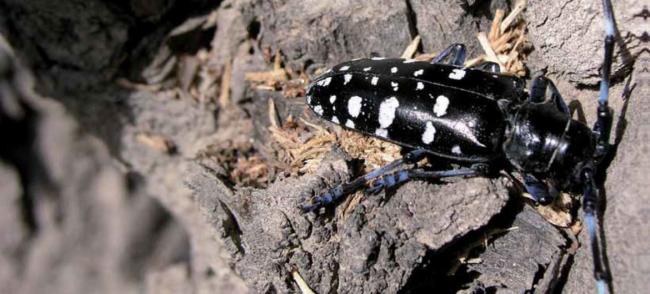
Crop pests are “dangerous hitchhikers,” as experts put it, that can wreak havoc on biodiversity, food security and trade by jumping borders through trade in infected fruits, crops, seeds and even ornamental plants. The wooden containers and boxes they travel in can act as vectors, while timber and wood products like furniture can also harbour stowaways.
For instance, oriental fruit flies, or Bactrocera dorsalis, which originated in Asia, have now spread to at least 65 countries, and their presence in Africa costs the continent an estimated $2 billion in annual losses because other countries have banned the import of fruits from afflicted countries.
New measures adopted by the IPPC include a stronger standard for the use of heat vapour to kill oriental fruit flies. The control technique outlined under the new measure kills 99.98 per cent of the bug’s eggs and larvae.
IPPC endorsed new diagnostic protocols for sudden oak death, a fungi-like organism of unknown origin that attacks a wide range of trees and shrubs in nurseries, introduced into western North America and western Europe through the ornamental plants trade.
The latest rules also include cold treatment techniques that freeze and kill pests, those that raise temperatures past their survival threshold, as well as a new diagnostic protocol for tospoviruses, which affect 1,000 plant species and are causing devastating losses, especially to tomato, potato and squash and cucumber yields.
Since its establishment in 1952, the IPPC has promulgated some 100 standards covering a broad range of phytosanitary issues, and it also runs numerous programs to share best-practices and build the capacity of developing countries to manage plant diseases and pests, both at home and in trade flows.
Support Our Journalism
We cannot do without you.. your contribution supports unbiased journalism
IBNS is not driven by any ism- not wokeism, not racism, not skewed secularism, not hyper right-wing or left liberal ideals, nor by any hardline religious beliefs or hyper nationalism. We want to serve you good old objective news, as they are. We do not judge or preach. We let people decide for themselves. We only try to present factual and well-sourced news.
Support objective journalism for a small contribution.


