


WHO sets up health monitoring, early warning alert in Cox’s Bazar
“The Control Room will help strengthen disease surveillance system and daily reporting of morbidity and mortality. It will enhance active monitoring of the health situation, provide early warning alerts on outbreak prone diseases and will allow improved and efficient coordination of various health actors on the ground,” Dr N Paranietharan, WHO Representative to Bangladesh, said inaugurating the control room along with Directorate General of Health Services.
The WHO Representative said this system will help in management of health situation, as the population is very mobile, dispersed in 68 camps, and undocumented. In general, there is limited reliable data on the health profile of the newly arrived population.
The Control Room would also help in coordination of activities. There are a number of medical teams in the field, some of them operated by different actors such as either public sector, International Organizations or NGO’s, making it difficult to coordinate and monitor overall health situation and services availability.
The Control room will receive daily information from all the medical teams irrespective of who operates them, it will analyze the information and provide conclusive assessments to the public authorities to make informed decisions on further actions.
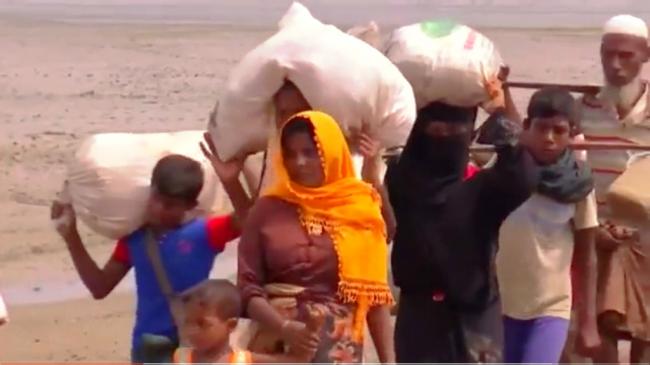
The system is part of WHO’s response in supporting the Government of Bangladesh to lead the humanitarian health response required to address the needs of the recent influx of over 400.000 Rohingyan migrants from Myanmar in less than a month.
WHO is committed to ensure effective coordination is in place at the field level, in collaboration with other UN agencies, IOM, UNFPA, UNHCR and UNICEF as well as NGO partners involved in this effort.
Image: Internet ScreenGrab
Support Our Journalism
We cannot do without you.. your contribution supports unbiased journalism
IBNS is not driven by any ism- not wokeism, not racism, not skewed secularism, not hyper right-wing or left liberal ideals, nor by any hardline religious beliefs or hyper nationalism. We want to serve you good old objective news, as they are. We do not judge or preach. We let people decide for themselves. We only try to present factual and well-sourced news.
Support objective journalism for a small contribution.


