


Widespread and early heatwaves impact northern hemisphere, UN weather agency warns
“The heatwave is still ongoing and it is premature to say whether it can be attributed to climate change or whether it is due to naturally occurring climate variability,” stated Omar Baddour, who coordinates WMO’s World Climate Data and Monitoring Programme.
“But climate change scenarios predict that heatwaves will become more intense, more frequent and longer. It is notable that the time between major heatwaves (2003, 2010, and 2015) is getting shorter,” he pointed out.
In a press release issued over the weekend, WMO noted the extreme weather events currently taking place in the northern hemisphere.
An initial analysis conducted by WMO’s Regional Climate Centre in Europe shows that many parts of the continent will continue to see above normal temperatures and dry conditions. The heatwave is unusual because it is so early and so widespread, drawing comparisons with the 2003 and 2010 summers, during which tens of thousands of people died.
The difference is that the 2015 heatwave is much earlier and Europe much better prepared with heat-health action plans. WMO and the UN World Health Organization (WHO) on 1 July issued joint guidance on heat-health early warning systems, drawing to a considerable extent on the expertise and experience gained in Europe since the 2003 heatwave.
Many parts of the Western United States are also suffering from high temperatures, further drying out soils and increasing the risk of wildfires. This ranges from California to the states of Washington and Oregon in the northwest, parts of Washington State having seen temperatures exceeding 40 degrees Celsius in the past week.
No less than 623 climatic stations broke daily maximum high records in the last seven days, and 17 broke all-time records for maximum temperatures, noted the press release.
The wildfire season in North America has gotten off to a very early start because of a number of factors including dry conditions, heat and lightning. In a 29 June report, the Alaska Wildland Fire Information said “June 2015 isn’t quite over, but our totals with one day left in the month are sobering: 399 fires have burned some 1,600,000 acres.”
“The wildfire situation this summer has mainly been triggered by repeated lightning storms tracking across an abnormally dry state. The lightning has been astonishing; on June 21-23, some 50,000 lightning strikes were recorded in Alaska.”
In Pakistan, the heatwave which caused more than 1,200 deaths in Karachi recently was aggravated by a low pressure system off the coast, which meant that the usual cooling coastal breeze was replaced by hot air coming from interior. According to the authorities, temperatures remain high, but the situation has stabilized. Parts of Pakistan have seen the onset of the monsoon.
Finally, southwest China has witnessed a heatwave with temperatures over 35 degrees for a widespread area, accompanied by exceptionally heavy rainfall and widespread flood, prompting the Chinese authorities to issue level 4 emergency alert, the press release stated.
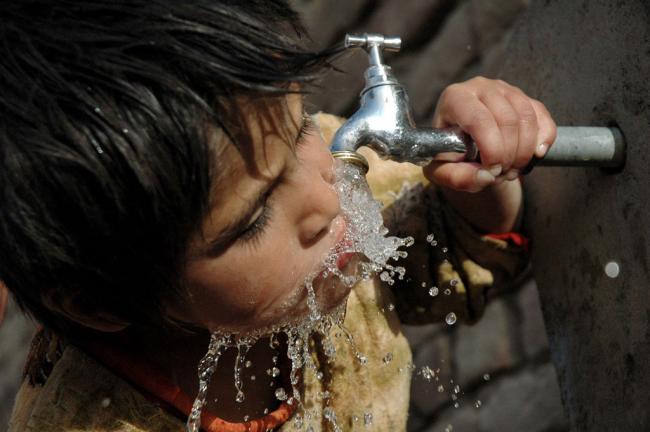
Photo: Imal Hashemi/Taimani Films/World Bank
Support Our Journalism
We cannot do without you.. your contribution supports unbiased journalism
IBNS is not driven by any ism- not wokeism, not racism, not skewed secularism, not hyper right-wing or left liberal ideals, nor by any hardline religious beliefs or hyper nationalism. We want to serve you good old objective news, as they are. We do not judge or preach. We let people decide for themselves. We only try to present factual and well-sourced news.
Support objective journalism for a small contribution.


