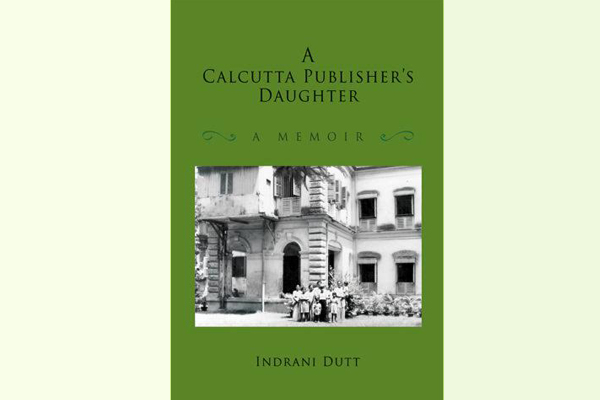
A Calcutta Publisher's Daughter re-lives the days of Signet Press
Like most people, I just knew the names of the legendary books that Signet had come out with—ranging from Discovery of India by Jawaharlal Nehru to Chander Pahar by Bibhutobhushan Bandopadhyay.
So when I got the opportunity to read the stories behind this illustrious organisation, I was excited.
This book was an opportunity to know about Signet, to know the people behind Signet, to know how the legendary publications came into existence—in short this was an enthralling trip through a fascinating lane of publishing history.
'A Calcutta Publisher’s Daughter' has been authored by Indrani Dutt. She is the daughter of Dilip Kumar Gupta, better known as DK, the co-founder of Signet Press.
The author has recreated the world of Signet Press for the readers through her beautiful words.
The house where the Press had its base has been described with such loving details that it comes alive for the readers very vividly.
Through Dutt’s words it is so easy to imagine Satyajit Ray sitting at a corner table doing cover illustrations for some legendary books, to visualise Jawaharlal Nehru traipsing up the stairs to check the galley proofs of his book, Discovery of India.
Dutt narrates how attached she and her siblings were to the house and the profound effect the house, the Press office, and the whole atmosphere had on her as a child.
The house at 10/2 Elgin Road not only served as the breeding ground of great literature but it also served as the house that nourished the imagination, the soul of the author and her family.
Another feat that this narrative achieves is that it brings alive the Calcutta of yesteryears, from the Alipore Zoo to Flurys to Woodburn Street to Elgin Road.
The cultural atmosphere in the city has been described with haunting reminiscence.
The author tells us how rich, how glamorous the old movie theatres used to be—the ones that are extinct now or are fading away.
The daily, humdrum lives of a domestic household, in those days, have been described with precise details.
The movie culture prevalent in those times and the cultural renaissance that Calcutta went through—all have been captured through the gripping narrative.
The change that Calcutta went through to become what it is today has been represented through Dutt’s perspective.
The most fascinating part of this book has to be the chapters on the two founders of Signet, the author’s maternal grandmother and her father.
The two illustrious characters have been portrayed here as the heroes that the author has idolized all her life and why not!
They were true heroes of their age who pioneered a great literary change in the Indian society through their innovative and modern ideas about the literary works they published.
Now that the publishing diaspora in Bengal is going through a rough patch, it is time that the concerned authorities take a leaf out of the Signet book and find a brighter way forward.
And perhaps, this wonderful memoir by Indrani Dutt would help them do just that.
(Reviewed by Priya Das)
Support Our Journalism
We cannot do without you.. your contribution supports unbiased journalism
IBNS is not driven by any ism- not wokeism, not racism, not skewed secularism, not hyper right-wing or left liberal ideals, nor by any hardline religious beliefs or hyper nationalism. We want to serve you good old objective news, as they are. We do not judge or preach. We let people decide for themselves. We only try to present factual and well-sourced news.
Support objective journalism for a small contribution.