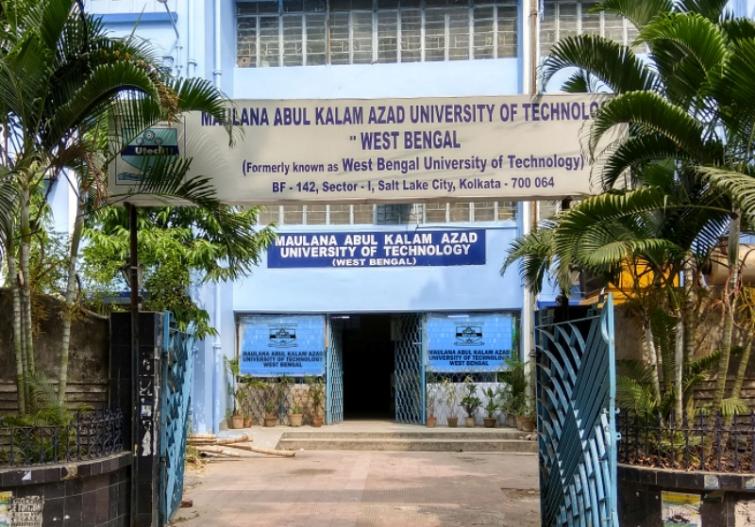
MAKAUT launches new certification and diploma courses on Archaeology
Kolkata/IBNS: Maulana Abul Kalam Azad University of Technology, West Bengal, is all set to launch new certification and diploma courses on Archaeology.
Archaeology is the study of human activity through the revival and study of material culture.
The archaeological record consists of artefacts, architecture, bio facts or eco facts and cultural landscapes. Archaeology can be considered both a social science and a branch of the humanities. The discipline involves surveying, excavation and eventually analysis of data collected to learn more about the past. In broad scope, archaeology relies on cross-disciplinary research.
The course will be taught in the Heritage Cell that has recently been started by the University for the first time by Dr. Phanikanta Mishra, Former Regional Director, Archaeological Survey of India and at present Director of Heritage Cell, MAKAUT, WB and the author of the book ‘Rakhal Das Banerji: The Forgotten Archaeologist’.
These courses will make acquainted the students with studies of literary sources like Shilpa Shastra, Manasollasa, Natya Sastra, Roopmandana, Aparaajitapricha, Jataka tales, Panchtantra, Jain mythology etc.
Apart from these, the students will have an idea about the difference in Plan structure of Hindu, Buddhist and Jain temples so that they become friendlier with original structure while conservation or restoration is taken.
Students will be introduced to mythology, epics and puranic episodes as most of the monuments have stories which are not yet been engraved. Further, they will be also trained about geology which will give them a clear idea on the subject as well.
The students will be also sent for practical training to utmost 50 percent of the sites. The main motto is just not to give the students a degree but also guide them with a proper knowledge about the course, an official statement claims.
By studying this course, students will understand in a better way about how and why human behaviour has changed over time. Archaeology can go where other subjects cannot – further back in time than other subjects and into aspects of society and human behaviour that other subjects can never reach. Also, MAKAUT is going to host a seminar in February 2020 on ‘Heritage of Bengal’ so that students can get detailed knowledge about the course and find interest in studying the subject.
The course comprises of the following:
1. One year PG Diploma in Archaeology (Duration 400 Hours)
2. One year Diploma course in Archaeological Conservation & Restoration (Duration 400 Hours)
3. Certificate course for 90 days in Conservation, Restoration & Antiquarian Law (Duration 120 Hours)
Support Our Journalism
We cannot do without you.. your contribution supports unbiased journalism
IBNS is not driven by any ism- not wokeism, not racism, not skewed secularism, not hyper right-wing or left liberal ideals, nor by any hardline religious beliefs or hyper nationalism. We want to serve you good old objective news, as they are. We do not judge or preach. We let people decide for themselves. We only try to present factual and well-sourced news.
Support objective journalism for a small contribution.