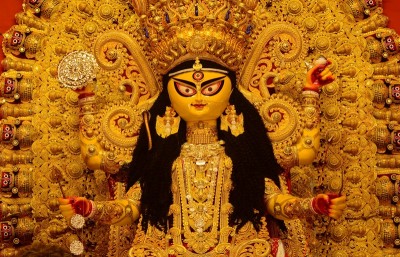
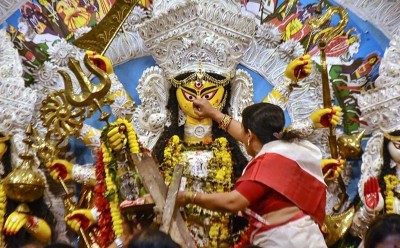
 Bengali New Year
Shubho Nabobarsho: Bengali community celebrates Poila Boisakh
Kolkata/New Delhi: As the dawn of Apr 14 sets in, Bengalis across the globe cheered aloud and welcomed the first day of the Bengali New Year- 'Poila Boisakh' on Friday.
The occasion of Poila Boisakh is celebrated in both the Indian state of West Bengal and Bangladesh besides the Bengalis residing all over the globe.
The pages of history states that the occasion of Poila Boisakh and the celebrations associated with it commenced from the reign of Mughal emperor King Akhbar.
It is said that during the reign of Mughal emperors, agricultural taxes were collected from the farmers by following the Hijri calendar. However, this Hijri calendar is a purely lunar calendar and it does not coincide with the harvest.
This made it difficult for the farmers as they were forced to pay taxes out of season.
In order to resolve this difficulty, Mughal Emperor Akbar ordered a reform of the calendar.
The new Fasli San (agricultural year) was introduced in the year 1584 and came to be known as Bengali year.
According to tradition it became mandatory to clear up all dues on the last day of Choitro.
On the next day, or the first day of the new year, landlords would entertain their tenants with sweets. On this occasion there used to be fairs and other festivities.
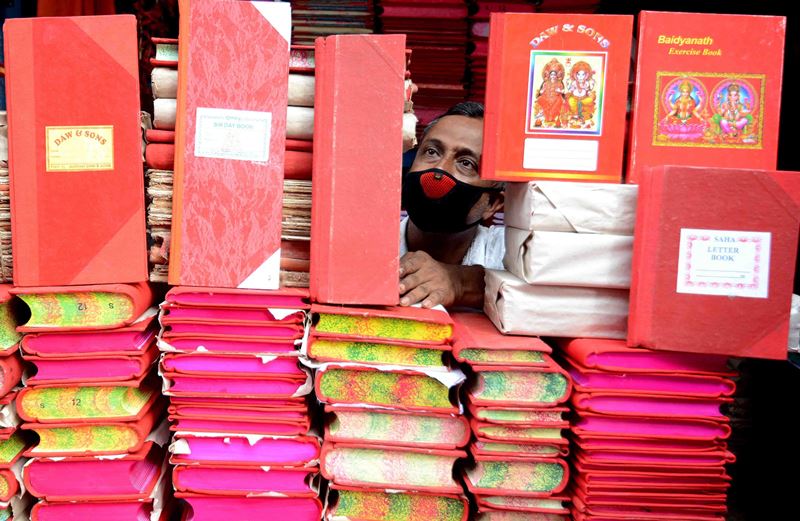
Even at this age, the festival of 'Halkhata' is celebrated on the morning of Poila Boisakh as the businessman prays to the Hindu Lord Ganesha and Lord Laxmi and also opens a new book of account.
In Kolkata, a special occasion of 'Choitro sale' is marked till the last day of the Bengali month is 'Choitra', where people can buy various goods ranging from clothes to mobile phones these days at a cheaper rate.
And on the first day of Boisakh, the traders give sweet packets to the buyers when they visit the shop.
As the mood of festivity sets in, girls and women, clad in traditional attires (dhoti and saree) visits various places in Kolkata.
From new age shopping malls to Kolkata's Nadan cultural complex, they visit all these places and get involved in the 'Nipat adda' (chatting).
শুভ নববর্ষ, ১৪২৯।
— Mamata Banerjee (@MamataOfficial) April 15, 2022
নববর্ষে শুভ আনন্দে জাগো।
সকলকে জানাই অনেক অনেক প্রীতি, শুভেচ্ছা ও অভিনন্দন।
সুস্থ থাকুন, ভাল থাকুন, আগামী দিনগুলি খুব আনন্দে কাটুক।
Indian PM Narendra Modi greeted the nation and tweeted: "Shubho Nabo Barsho! Best wishes on Poila Boishakh."
Shubho Nabo Barsho!
— Narendra Modi (@narendramodi) April 15, 2022
Best wishes on Poila Boishakh. pic.twitter.com/Nfle3Erb9Z
West Bengal CM Mamata Banerjee also wished people on Poila Boisakh.
Support Our Journalism
We cannot do without you.. your contribution supports unbiased journalism
IBNS is not driven by any ism- not wokeism, not racism, not skewed secularism, not hyper right-wing or left liberal ideals, nor by any hardline religious beliefs or hyper nationalism. We want to serve you good old objective news, as they are. We do not judge or preach. We let people decide for themselves. We only try to present factual and well-sourced news.
Support objective journalism for a small contribution.