
The old Panjika or the Bengali almanac is also a reflection of then contemporary life, discovers author Asit Paul
Kolkata, May 19 (IBNS): Author Asit Paul has delved into the advertisements and illustrations found in the Panjika (Bengali for almanacs), published in Bengal during the 19th and 20 centuries, in his book 'Adi Panjika Darpan'.
Kolkata-based books and lifestyle store chain Starmark in association with Signet Press recently hosted the launch of the book in the city.
Eminent artists Ramananda Bandyopadhyay and Jogen Chowdhury, and Jawhar Sircar, former CEO, Prasar Bharati, along with the author, unveiled the book.
The book delves into how the Panjika influenced the life of Bengali Hindus in days bygone -- when, nearly every act, such as holding of religious and social functions, journey dates, even eating certain fruits and vegetables, etc., would be decided by consulting a Panjika; people’s faith in it was supreme.
Soon, merchants and commercial houses found that a Panjika provided the easiest way to reach the masses with news of their products.
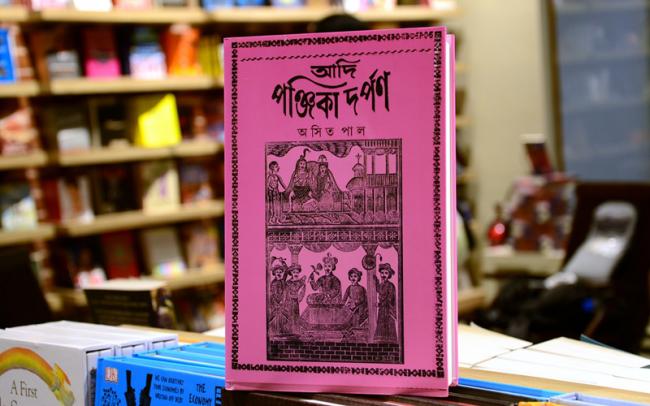 "The advertisements took advantage of people’s faith in god and made best possible use of it,” said author Asit Paul.
“Interestingly, even back then, a regulatory body was formed to curb fraud advertisers who might misuse people’s faith," he said.
Said Jawhar Sircar, “It is very interesting to see how people worship idols of gods and goddesses based on the structure that the craftspeople give them. We don’t know whether it is how gods actually look like.”
The book is priced Rs 650.
(Reporting by Sourajit Choudhury)
Support Our Journalism
We cannot do without you.. your contribution supports unbiased journalism
IBNS is not driven by any ism- not wokeism, not racism, not skewed secularism, not hyper right-wing or left liberal ideals, nor by any hardline religious beliefs or hyper nationalism. We want to serve you good old objective news, as they are. We do not judge or preach. We let people decide for themselves. We only try to present factual and well-sourced news.
Support objective journalism for a small contribution.