Calling someone ‘Miyan-Tiyan’ or ‘Pakistani’ in poor taste but not a crime: Supreme Court
New Delhi: The Supreme Court has observed that referring to someone as “Miyan-Tiyan” or “Pakistani” may be inappropriate but does not constitute an offence of hurting religious sentiments under the law, media reports said.
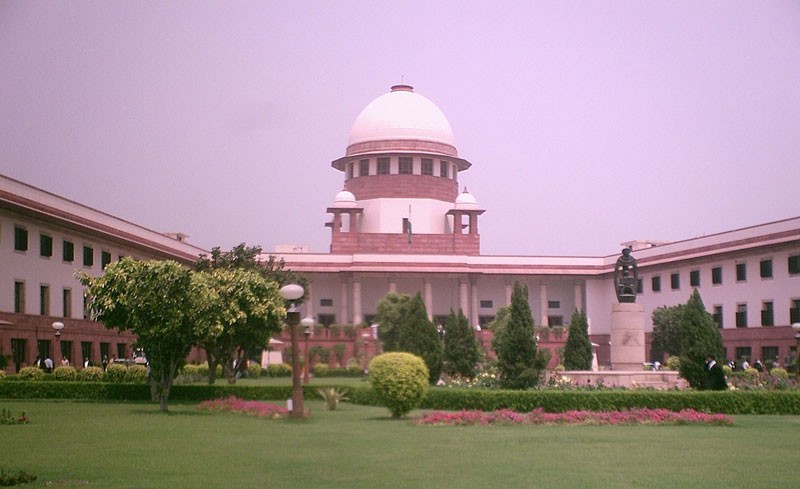
A bench of Justices BV Nagarathna and Satish Chandra Sharma made this remark while dismissing a case against a man accused of calling a government employee “Pakistani”, reported The Times of India.
The case stemmed from an FIR filed by an Urdu translator, who also served as an acting RTI clerk at the sub-divisional office in Chas, Jharkhand.
"The appellant is accused of hurting the religious feelings of the informant by calling him 'Miyan-Tiyan' and 'Pakistani'. Undoubtedly, the statements made are in poor taste. However, it does not amount to hurting the religious sentiments of the informant. Hence, we are of the opinion that the appellant shall also be discharged under Section 298 IPC," the court stated in its February 11 order, the report said.
Under Section 298 of the Indian Penal Code (IPC), words or gestures made with the deliberate intent to offend religious sentiments are punishable.
The case involved Hari Nandan Singh, who had sought information under the RTI Act from the additional collector-cum-first appellate authority in Bokaro.
Although the documents were sent to him, he later appealed, allegedly tampering with the records received via registered post and making false claims about document alterations.
As per court documents, the appellate authority instructed an Urdu translator to personally deliver the required documents to Singh.
On November 18, 2020, the translator, accompanied by a messenger from the Chas sub-divisional office, visited Singh’s residence.
Initially, Singh refused to accept the papers but eventually complied after persistent efforts by the translator.
Singh allegedly verbally abused the translator, making remarks about his religion, and also used criminal force against him.
This led to an FIR against Singh, following which the trial court charged him under IPC Sections 298 (hurting religious sentiments), 353 (assault or criminal force against a public servant), and 504 (intentional insult).
His plea to quash the proceedings was rejected by the Jharkhand High Court.
However, the Supreme Court ruled in Singh’s favour, overturning the High Court's order and dismissing all charges against him.
"We set aside the order of the high court which has sustained the order of the trial court and consequently allow the application filed by the appellant and discharge the appellant from all the three offences alleged against him," the bench stated, reported TOI.
Support Our Journalism
We cannot do without you.. your contribution supports unbiased journalism
IBNS is not driven by any ism- not wokeism, not racism, not skewed secularism, not hyper right-wing or left liberal ideals, nor by any hardline religious beliefs or hyper nationalism. We want to serve you good old objective news, as they are. We do not judge or preach. We let people decide for themselves. We only try to present factual and well-sourced news.
Support objective journalism for a small contribution.