 Delhi Blast
Delhi car blast triggered by panic? Sources say the IED used was 'unfinished'
Delhi/IBNS: In a startling new turn in the investigation into Monday’s explosion near Delhi’s Red Fort, top intelligence sources suggest the blast may have been an accidental detonation rather than a deliberate suicide attack.
Early forensic and intelligence assessments point to the possibility that the suspects panicked while transporting explosives, leading to a premature and incomplete explosion inside the vehicle.
According to intelligence inputs, the raids conducted across multiple Indian cities on Monday, along with the seizure of 2,900 kg of explosive chemicals in Haryana’s Faridabad, may have caused widespread panic among operatives linked to the terror network.
Investigators believe this sudden pressure might have pushed them to relocate the materials in haste, which could have resulted in a tragic mishap.
A shift in the investigation’s focus
Initially believed to be a suicide attack, the case has now taken a sharp turn after forensic experts suggested that the improvised explosive device (IED) found in the remains of the car was improperly assembled.
Sources said the IED did not appear to have been armed for maximum impact, which significantly reduced the blast’s destructive power.
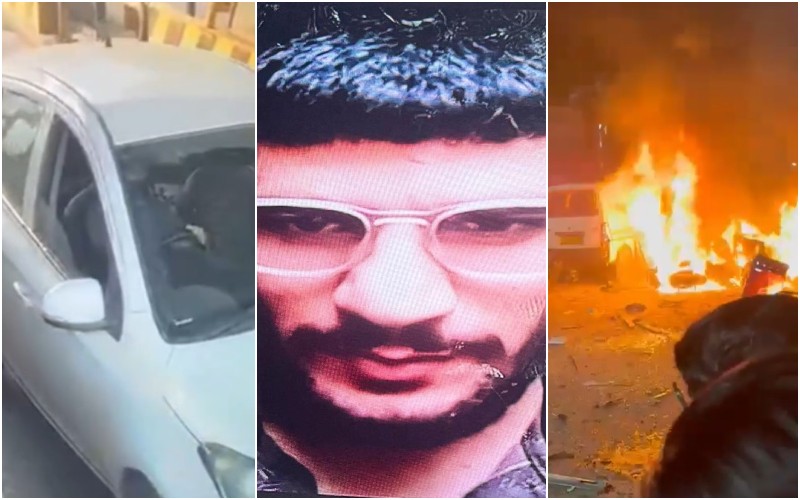
At least eight people were killed and 24 were injured in a powerful explosion that ripped through a Swift Dzire car near the Red Fort Metro Station this evening. The blast triggered a massive fire, engulfing nearby vehicles and sending shockwaves through the busy Old Delhi area. pic.twitter.com/GfzC5qMTIe
— India Blooms (@indiablooms) November 10, 2025
The Hyundai i20 that exploded near the Red Fort killed nine people and injured at least two dozen others.
Witnesses described the explosion as so powerful that it shook nearby buildings in the Chandni Chowk area, one of the most crowded commercial districts of Delhi.
Signs point to a mishandled device
Investigators found no blast crater or metal projectiles—both key indicators of a well-armed explosive—at the site.
This evidence supports the theory that the blast occurred accidentally, possibly while the suspects were on the move.
Officials believe the IED could have detonated prematurely due to vibration or tampering while the car crawled through Delhi’s heavy traffic.
“The motion of the vehicle, coupled with the suspect’s nervousness, may have triggered the unstable device,” one senior intelligence officer said.
Panic after nationwide raids
The timing of the explosion, just hours after raids on suspected sleeper cells across India, is being viewed as more than a coincidence.
CCTV footage captures suspected suicide bomber in Hyundai i20 car ahead of blast close to Delhi's Red Fort #RedFortBlast #DelhiBlast #Delhiexplosion #Delhi #DelhiTerrorism #Hyundaii20 #DrMohammadUmar pic.twitter.com/rn2Oo1NmmV
— India Blooms (@indiablooms) November 11, 2025
Agencies believe the suspects panicked as security forces closed in on the terror module based in Faridabad, prompting them to move or destroy the explosives before being caught.
“The coordinated crackdown likely forced their hand,” an official explained. “Our operations may have prevented a much larger catastrophe.”
The key suspect: A doctor-turned-operative
The driver of the white Hyundai i20 has been identified as Dr Umar Mohammad, a medical professional from Jammu and Kashmir.
A new CCTV footage has emerged showing suspect in his I-20 car at the Badarpur Toll Plaza around 8:13 am, entering Delhi. In the footage, the suspect can be seen wearing a mask.#Delhi #DelhiBlast pic.twitter.com/BrtGpOffET
— India Blooms (@indiablooms) November 11, 2025
Intelligence sources revealed that Umar went underground three days before the blast, switching off his phone and severing contact with his family.
What has shocked investigators is that many members of the suspected terror network were doctors—using their medical credentials as a cover to evade suspicion.
Two of Umar’s associates, Dr Muzammil Shakeel and Dr Shaheen Shahid from Al-Falah University in Faridabad, were arrested earlier for possessing huge quantities of explosives, arms, and ammunition.
Authorities suspect Shahid was also involved in attempts to establish a women’s wing of the Pakistan-based terror outfit Jaish-e-Mohammed (JeM) in India.
Ongoing NIA probe
The National Investigation Agency (NIA) has taken over the investigation, with forensic experts examining the remains of the car, the IED fragments, and the chemical residues recovered from the site.
Investigators are also analysing digital footprints and phone records of the suspects to map out the wider terror network and its possible foreign links.
While the investigation is still in its early stages, officials have not ruled out that Umar may have intended to destroy the explosives after realising the heat from security agencies, leading to a panic-triggered detonation.
As one senior investigator put it, “Every new piece of evidence points to confusion, haste, and fear. This may have been a deadly accident born out of panic — not a planned suicide mission.”
Support Our Journalism
We cannot do without you.. your contribution supports unbiased journalism
IBNS is not driven by any ism- not wokeism, not racism, not skewed secularism, not hyper right-wing or left liberal ideals, nor by any hardline religious beliefs or hyper nationalism. We want to serve you good old objective news, as they are. We do not judge or preach. We let people decide for themselves. We only try to present factual and well-sourced news.
Support objective journalism for a small contribution.