 Stray Dog Case
Supreme Court to issue directions on feeding of stray dogs in government premises
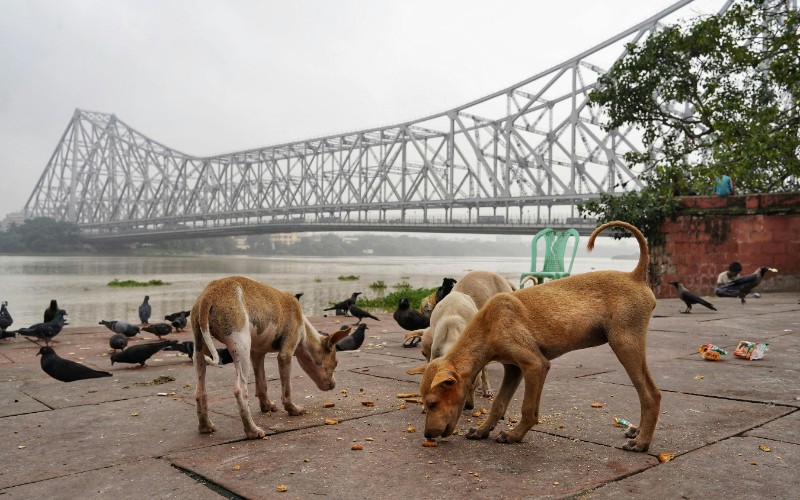
The Supreme Court on Monday said that it will soon issue an order—likely within the next few days—regulating the feeding of stray dogs within institutional premises, including government establishments where employees care for and feed stray canines.
The bench has scheduled the matter for orders on November 7.“We will be issuing directions specifically for government, public sector, and other large institutions where employees are feeding and encouraging stray dogs,” Justice Nath said during the hearing.
Although some intervenors sought an opportunity to be heard before the order is passed, the bench refused, stating, “For institutional matters, we are not going to hear any averment at all.”
The court clarified that hearings for other related parties would continue after the interim order is issued.
At an earlier hearing on October 27, the Supreme Court had criticised states and Union Territories for failing to comply with its previous directions on the stray dog issue.
The bench remarked that incidents of dog attacks were being used to tarnish India’s global image and summoned the chief secretaries of all states and UTs—except West Bengal and Telangana—to appear in person.
On Monday, the chief secretaries appeared before the bench and confirmed that compliance affidavits had been filed.
Taking note of this, the court said their personal appearance would no longer be required but warned that they might be summoned again if any future lapses occur.However, victims of dog attacks were allowed to intervene without any such deposit.The bench also permitted impleadment and intervention applications from NGOs and dog welfare groups, provided they had deposited the required amounts of Rs 25,000 or Rs 2 lakh with the court registry.
The court also issued notice to the Animal Welfare Board of India.
The suo motu case dates back to July 2024, when the Supreme Court took cognisance of multiple reports of severe and fatal stray dog attacks in Delhi and the NCR.Initially, a two-judge bench had directed civic bodies to capture and permanently shelter all stray dogs within eight weeks—a move that drew sharp criticism from animal rights organisations for being “too harsh” and impractical.
Following the backlash, the Chief Justice reassigned the case to a larger three-judge bench, which revised the earlier order on August 22.
The bench stayed the directive mandating permanent sheltering, extended the case’s scope to cover all states and UTs, and modified the previous ban on releasing vaccinated dogs.
It ruled that stray dogs should be released after undergoing sterilisation and de-worming, calling this approach more balanced and humane.
Support Our Journalism
We cannot do without you.. your contribution supports unbiased journalism
IBNS is not driven by any ism- not wokeism, not racism, not skewed secularism, not hyper right-wing or left liberal ideals, nor by any hardline religious beliefs or hyper nationalism. We want to serve you good old objective news, as they are. We do not judge or preach. We let people decide for themselves. We only try to present factual and well-sourced news.
Support objective journalism for a small contribution.