


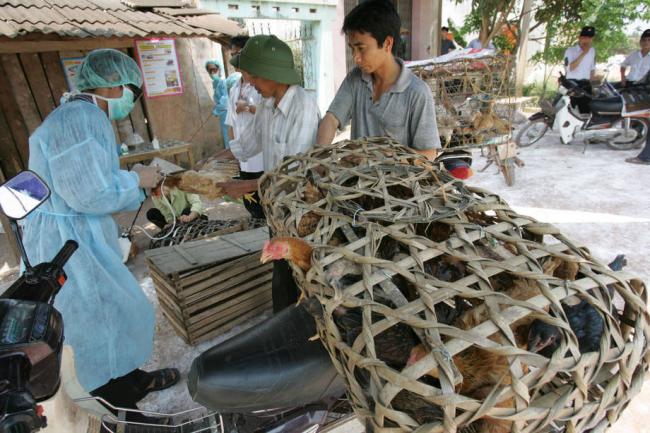
‘Constant surveillance’ needed to tackle resurgent outbreak of avian influenza – UN agency
The H7N9 strain of avian influenza, first detected in China four years ago, has experienced resurgence since December 2016, the Food and Agriculture Organization of the United Nations (FAO) and the World Organisation for Animal health (OIE) have reported. The virus can be lethal to both humans and poultry.
"To protect human health and people's livelihoods, it is essential to tackle the disease at its source in poultry: efforts need to target eliminating H7N9 from affected farms and markets," said Vincent Martin, FAO's Representative in China.
The H7N9 strain is considered endemic in eastern and south-eastern China, and as of early March, has been estimated to be linked to more human cases of avian influenza than all other strains of avian influenza combined.
China’s Ministry of Agriculture has ordered animal husbandry, veterinary and public health officers, as well as industry and commerce authorities to take closely coordinated and timely action to control the spread of the virus. Neighbouring countries are at high risk as are all that have poultry trade connections with China.
"Targeted surveillance to detect the disease and clean infected farms and live bird markets, intervening at critical points along the poultry value chain – from farm to table – is required. There should be incentives for everybody involved in poultry production and marketing to enforce disease control."
Surveillance of the virus had proven difficult in the past, as the virus caused mild or no illnesses in the poultry and infected chickens displayed few or no symptoHowever new evidence from China’s Guangdong Province shows the emergence of a strain which can lead to high mortality for birds within 48 hours of infection, enabling quicker detection but also potentially raising the risk of severe animal and economic losses for the poultry industry.
Matthew Stone, Deputy Director General of the OIE said, "China has been quick to notify international organizations about the virus' recent change from low to high pathogenicity in poultry. Given the continuous risk of virus change, inherent to all influenza viruses, timely sharing of surveillance results and sequence information with the international community is crucial for pandemic preparedness."
While more than 1,200 human cases of H7N9 have been reported since 2013, there is no danger of catching the disease by eating chicken. As in previous waves, most patients infected reported visiting live bird markets or had come into contact with infected birds.
“We need to understand the drivers of this disease in devising appropriate control and preventive strategies", said Dr. Juan Lubroth, FAO Chief Veterinary Officer. "These must be tailored to meet the expectations of all stakeholders involved, such as farmers, traders, transporters, market operators, government and international agencies and the consumer."
Photo: FAO/Hoang Dinh Nam
Source: www.justearthnews.com
Support Our Journalism
We cannot do without you.. your contribution supports unbiased journalism
IBNS is not driven by any ism- not wokeism, not racism, not skewed secularism, not hyper right-wing or left liberal ideals, nor by any hardline religious beliefs or hyper nationalism. We want to serve you good old objective news, as they are. We do not judge or preach. We let people decide for themselves. We only try to present factual and well-sourced news.
Support objective journalism for a small contribution.


