July 10, 2026 03:47 pm (IST)

Follow us:


As Yemen crisis deteriorates, UNICEF says children at increasing risk of disease, hunger
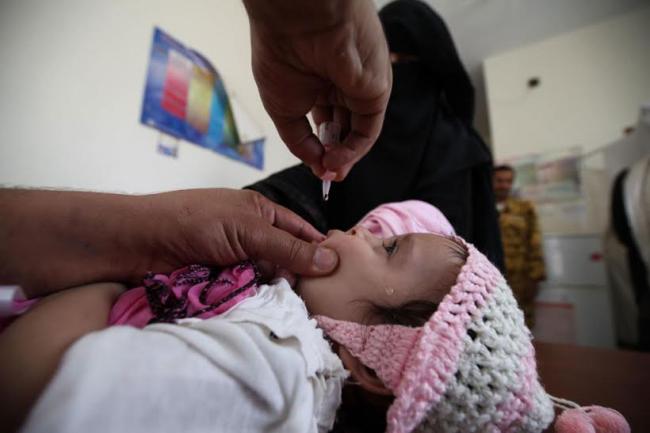
New York, July 1 (IBNS): The ongoing conflict in Yemen is having a devastating impact on the country's health system and has exposed millions of children to the threat of preventable diseases, the United Nations Children's Fund (UNICEF) has warned.
Addressing a press briefing in Geneva earlier today, UNICEF spokesperson Christophe Boulierac said that millions of children in the war-torn Gulf state are at risk of disease amid widespread interruptions in vaccination services.
While shortages in electricity and fuel are impacting health centres’ ability to provide children with critical services, many parents were also too frightened by the sharp escalation in fighting to take their children to receive vaccinations. The result, he said, is that an estimated 2.6 million children under the age of 15 are now at risk of contracting measles – a potentially fatal disease spread rapidly in times of conflict and population displacement.
At the same time, Boulierac cautioned that the number of children exposed to Acute Respiratory Infections is also likely to surge to 1.3 million due to the lack of vaccinations while over 2.5 million children remain at risk of diarrhoea due to the unavailability of safe water, poor sanitary conditions and lack of access to Oral Rehydration Salt, compared to 1.5 million prior to the conflict.
The humanitarian stresses brought on by Yemen’s conflict have only compounded the already severe human toll of the fighting. The UN has reported that thousands of people in the country have been killed and injured by airstrikes and ground fighting in the last three months alone while over 1 million people have fled their homes.
Against that backdrop, a recent joint survey released by the UN Food and Agriculture Organization (FAO) and the World Food Programme (WFP), confirmed that six million people in the country are slipping towards severe hunger and now need emergency food and life-saving assistance, a sharp increase from the last quarter of 2014. In addition to the population facing a food security 'emergency,' over 6.5 million people are classified as facing a food insecurity security 'crisis.'
At today’s briefing, the UNICEF spokesperson cited the agency’s estimates that more than half a million children under five years of age are at risk of developing severe and acute malnutrition over the next 12 months if the situation continued to deteriorate.
Nevertheless, he said, in spite of the growing challenges, the UN agency remains on the ground delivering life-saving vaccinations and health services as well as providing crucial assistance through mobile health and nutrition teams.
While shortages in electricity and fuel are impacting health centres’ ability to provide children with critical services, many parents were also too frightened by the sharp escalation in fighting to take their children to receive vaccinations. The result, he said, is that an estimated 2.6 million children under the age of 15 are now at risk of contracting measles – a potentially fatal disease spread rapidly in times of conflict and population displacement.
At the same time, Boulierac cautioned that the number of children exposed to Acute Respiratory Infections is also likely to surge to 1.3 million due to the lack of vaccinations while over 2.5 million children remain at risk of diarrhoea due to the unavailability of safe water, poor sanitary conditions and lack of access to Oral Rehydration Salt, compared to 1.5 million prior to the conflict.
The humanitarian stresses brought on by Yemen’s conflict have only compounded the already severe human toll of the fighting. The UN has reported that thousands of people in the country have been killed and injured by airstrikes and ground fighting in the last three months alone while over 1 million people have fled their homes.
Against that backdrop, a recent joint survey released by the UN Food and Agriculture Organization (FAO) and the World Food Programme (WFP), confirmed that six million people in the country are slipping towards severe hunger and now need emergency food and life-saving assistance, a sharp increase from the last quarter of 2014. In addition to the population facing a food security 'emergency,' over 6.5 million people are classified as facing a food insecurity security 'crisis.'
At today’s briefing, the UNICEF spokesperson cited the agency’s estimates that more than half a million children under five years of age are at risk of developing severe and acute malnutrition over the next 12 months if the situation continued to deteriorate.
Nevertheless, he said, in spite of the growing challenges, the UN agency remains on the ground delivering life-saving vaccinations and health services as well as providing crucial assistance through mobile health and nutrition teams.
Support Our Journalism
We cannot do without you.. your contribution supports unbiased journalism
IBNS is not driven by any ism- not wokeism, not racism, not skewed secularism, not hyper right-wing or left liberal ideals, nor by any hardline religious beliefs or hyper nationalism. We want to serve you good old objective news, as they are. We do not judge or preach. We let people decide for themselves. We only try to present factual and well-sourced news.
Support objective journalism for a small contribution.



Latest Headlines
Ayatollah Ali Khamenei buried at Iran's holiest shrine as Middle East crisis deepens
Fri, Jul 10 2026
Iran's late Supreme Leader Ali Khamenei to be buried in hometown Mashhad after six days of mourning
Thu, Jul 09 2026
'He asked how my Indian cooking was progressing': Scott Morrison after meeting PM Modi
Thu, Jul 09 2026
Third tanker hit in 24 hours in Strait of Hormuz; drone strike raises fresh shipping fears
Tue, Jul 07 2026
Twin blasts rock Syria during Macron’s visit; 18 injured in explosions near Tourism Ministry
Tue, Jul 07 2026
'Death threat' before Melbourne event? Australia probes online post targeting PM Modi ahead of visit
Sat, Jul 04 2026