


Ban says new 2030 Agenda can help eradicate poverty
In a message ahead of the International Day for the Eradication of Poverty, Ban emphasized that the 17 Sustainable Development Goals (SDGs), can to unite the world towards ending extreme poverty and discrimination.
“In adopting the 2030 Agenda , world leaders made a time-bound commitment to end poverty in all its forms, everywhere. Our ability to meet this call requires us to address discrimination in all its forms.”
He said the theme of this year’s International Day, ‘Building a sustainable future: Coming together to end poverty and discrimination,’ highlights the need to focus greater attention on the excluded and marginalized members of the human family.
The target of halving extreme poverty in the world, set 15 years ago by the landmark Millennium Development Goals (MDGs), has already been reached in 2015.
As such, Ban said that “spurred on by the global mobilization behind the Millennium Development Goals, the world has made extraordinary progress in reducing extreme poverty. Over the past 25 years, more than one billion people have been lifted above the poverty threshold.”
However, more than 900 million people continue to live in extreme poverty, and many more are at risk. “Climate change, violent conflict and other disasters threaten to undo many of our gains,” he stressed.
Recalling that the 2030 Agenda 2030 aims to ensure a sustainable future to everyone the Secretary-General said, “Leaving no one behind means ending the discrimination and abuse targeted at one half of humankind – the world’s women and girls.”
“It means combatting overt discrimination against minorities, migrants and others – as well as the more insidious neglect of the disadvantaged, especially children. And it means ensuring access to the rule of law and protecting the human rights of all,” he added in his message.
The Secretary General concluded his message saying: “Ours can be the first generation to witness a world without extreme poverty, where all people – not only the powerful and the privileged – can participate and contribute equally, free of discrimination and want.”
In a separate message, UN Educational, Scientific and Cultural Organization (UNESCO) Director-General Irina Bokova said: “Our mission now is to achieve the total eradication of poverty in all its forms throughout the world.”
Indeed, for UNESCO, the eradication of poverty is a cornerstone in the fight for human rights and human dignity. “Fighting poverty in a sustainable manner requires providing everyone with the means to be autonomous and assert themselves as active agents throughout their own lives – harnessing the potential of education, science, culture and information,” she said in her message on the International Day.
“Human intelligence, creativity and talent are renewable resources par excellence,” the Director-General said, adding: “we can invest more in them to define economic, social and cultural policies that allow us to eradicate poverty and ensure that everyone can exercise their full rights, with dignity and social justice.”
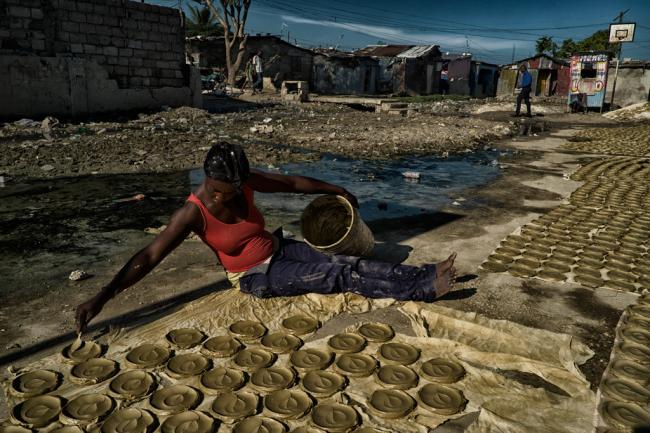
UN Photo/Logan Abassi
Support Our Journalism
We cannot do without you.. your contribution supports unbiased journalism
IBNS is not driven by any ism- not wokeism, not racism, not skewed secularism, not hyper right-wing or left liberal ideals, nor by any hardline religious beliefs or hyper nationalism. We want to serve you good old objective news, as they are. We do not judge or preach. We let people decide for themselves. We only try to present factual and well-sourced news.
Support objective journalism for a small contribution.


