


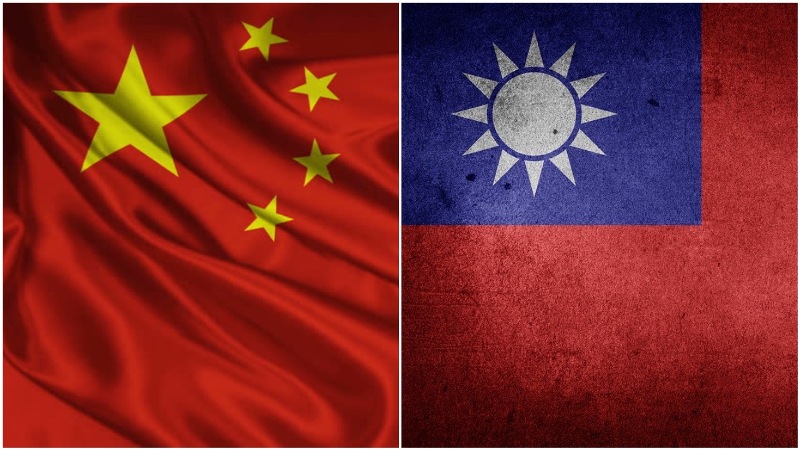
 PLA
PLA
Conflict with China: Taiwan, US count on giant radar system to get early warnings in case PLA attacks
Analysts believe that Taiwan's long-range radar system has become crucial for the safety of both the US and the self-ruled island amid rising tension with China, media reports said.
Analysts told South China Morning Post that the powerful radar system on top of a mountain in the island’s north would play a key role in the event of an attack from the People’s Liberation Army – including from its submarine base in the South China Sea, from where it could potentially target US military facilities in Japan and Guam.
The US$1.4 billion Precision Acquisition Vehicle Entry Phased Array Warning System, or PAVE PAWS, was built by US company Raytheon and has been fully operational since 2013, the newspaper reported.
Located at an altitude of 2,600 metres (8,500ft) on Leshan in Hsinchu county, the giant radar system can detect a missile launched from as far away as 5,000 km (3,100 miles) and track projectiles in motion in great detail, even from a distance of 2,000 km (1,200 miles) – a range that covers China and the entire South China Sea, the newspaper reported.
China claims Taiwan as its part.
“In the event of a Chinese attack, the PLA would be expected to … first take out the radar system so that Taiwan’s combat data link systems get cut off,” Sun Hai-tao, a retired Taiwanese major general and former commander of a Lafayette-class frigate, told the newspaper.
Wang Kung-yi, head of the Taiwan International Strategic Study Society, told South China Morning Post the island had “invested a great deal” to protect the facility.
“Anti-missile shields have been installed – the Patriot III anti-missile system and the locally developed mid-range Tien Kung 2 and the long-range Tien Kung 3,” he said. “That’s in addition to early-warning aircraft and a short-range anti-air artillery network.”
Support Our Journalism
We cannot do without you.. your contribution supports unbiased journalism
IBNS is not driven by any ism- not wokeism, not racism, not skewed secularism, not hyper right-wing or left liberal ideals, nor by any hardline religious beliefs or hyper nationalism. We want to serve you good old objective news, as they are. We do not judge or preach. We let people decide for themselves. We only try to present factual and well-sourced news.
Support objective journalism for a small contribution.


