


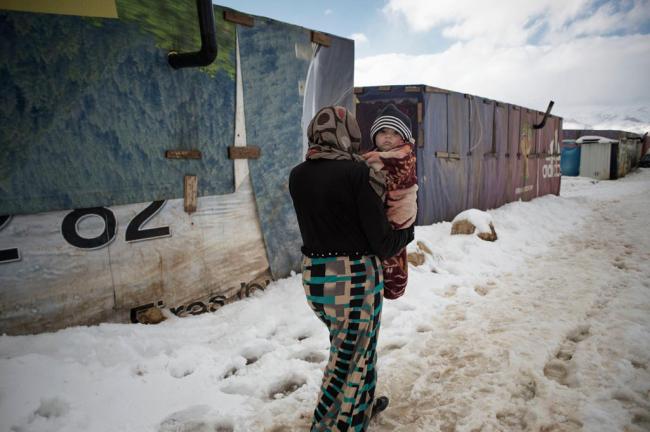
Every two seconds, a baby is born in a conflict zone - UNICEF
“Can there be a worse start in life?” asked UNICEF Executive Director Anthony Lake in a news release, appealing to the world to translate promises made in historic agreements over the past year into action to benefit the most vulnerable children in 2016.
“The final months of 2015 have seen the world come together around tackling climate change and a new global development agenda. These ambitious agreements present a huge opportunity if we can translate our promises into action for the most vulnerable children,” he said.
“If we address the reasons so many families feel the need to uproot themselves and their children from their homes – by resolving conflict, by addressing climate change, by expanding opportunity, we can make 2016 a year of hope for millions – not a year of despair,” emphasized the UNICEF chief.
UNICEF said that in conflict-affected countries such as Afghanistan, the Central African Republic, Iraq, South Sudan, Syria and Yemen, or on perilous journeys to escape fighting, newborn children and their mothers face enormous risks.
Pregnant mothers are in danger of giving birth without medical help and in unsanitary conditions, and their children are more likely to die before they reach their fifth birthdays and to experience extreme – or ‘toxic; – stress, which can inhibit their long-term emotional and cognitive development, it said.
“Every two seconds, a newborn takes its first breath in the midst of conflict, often in terrifying circumstances and without access to medical care,” Lake said. “Too many children are now starting their lives in extreme circumstances – from conflict to natural disasters, poverty, disease or malnutrition.”
And in addition to conflict and poverty, UNICEF noted the effects of climate change and lack of opportunity are making children increasingly vulnerable and have pushed millions on dangerous journeys away from their homes.
UNICEF also noted:
· More than 200,000 children applied for asylum in European Union countries in the first nine months of 2015, adding to the 30 million children across the globe forced from their homes by 2014 due to war, violence and persecution. More people are displaced now than at any moment since World War;
· More than a quarter of a billion children – or 1 in 9 – live in countries and areas in conflict and face enormous obstacles to their health, education and well-being;
· More than half a billion children live in areas where floods are extremely common and nearly 160 million live in high or extremely high drought severity zones; and
· Children represent almost half of all people living in extreme poverty although they make up roughly a third of the world’s population.
Photo: UNICEF/UNI179012/Alessio Romenzi
Support Our Journalism
We cannot do without you.. your contribution supports unbiased journalism
IBNS is not driven by any ism- not wokeism, not racism, not skewed secularism, not hyper right-wing or left liberal ideals, nor by any hardline religious beliefs or hyper nationalism. We want to serve you good old objective news, as they are. We do not judge or preach. We let people decide for themselves. We only try to present factual and well-sourced news.
Support objective journalism for a small contribution.


