


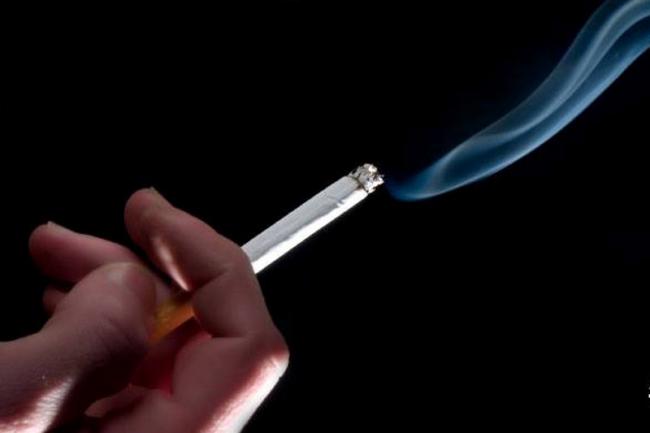
Films with on-screen smoking should carry warnings to protect children: WHO
“With ever tighter restrictions on tobacco advertising, film remains one of the last channels exposing millions of adolescents to smoking imagery without restrictions,” said Douglas Bettcher, the UN World Health Organization (WHO) Director for the Prevention of Non-communicable Diseases.
“Smoking in films can be a strong form of promotion for tobacco products. The 180 Parties to the WHO Framework Convention on Tobacco Control (WHO FCTC) are obliged by international law to ban tobacco advertising, promotion and sponsorship.”
According to the new WHO Smoke-free movies: from evidence to action, the third edition since its launch in 2009, studies in the United States have shown that on-screen smoking accounts for 37 per cent of all new adolescent smokers.
In 2014, the Centers for Disease Control and Prevention estimated that in the United States alone, exposure to on-screen smoking would recruit more than six million new, young smokers from among American children in 2014, two million of whom would ultimately die from tobacco-induced diseases.
In 2014, smoking was found in 44 per cent of all Hollywood films, and 36 per cent of those rated for young people. Almost two thirds (59 per cent) of top-grossing films featured tobacco imagery between 2002 and 2014.
That same year, the US Surgeon General reported that adult ratings of future films with smoking would reduce smoking rates among young Americans by nearly one fifth and avert one million tobacco-related deaths among today’s children and adolescents.
Many films produced outside of the United States also contain smoking scenes. Surveys have shown that tobacco imagery was found in top-grossing films produced in six European countries (Germany, Iceland, Italy, Poland, the Netherlands and the United Kingdom), and two Latin American countries (Argentina and Mexico).
Nine in 10 movies from Iceland and Argentina contain smoking, including films rated for young people, the report states.
The WHO Smoke-Free Movie report, in line with WHO FCTC, the guidelines, recommends policy measures including age classification ratings to reduce overall exposure of youth to tobacco imagery, certifying in credits that producers receive nothing of value from anyone in exchange for using or displaying tobacco products, and ending display of tobacco brands.
Strong anti-smoking advertisements should be shown before films containing tobacco imagery in all distribution channels (cinemas, televisions, online) and media productions that promote smoking should be ineligible for public subsidies.
Armando Peruga, programme manager of WHO’s Tobacco-Free Initiative, says some countries have taken steps to limit tobacco imagery in films.
“China has ordered that ‘excessive’ smoking scenes should not be shown in films. India has implemented new rules on tobacco imagery and brand display in domestic and imported films and TV programmes,” he added. “But more can and must be done.”
Photo: World Bank/www.justearthnews.com
Support Our Journalism
We cannot do without you.. your contribution supports unbiased journalism
IBNS is not driven by any ism- not wokeism, not racism, not skewed secularism, not hyper right-wing or left liberal ideals, nor by any hardline religious beliefs or hyper nationalism. We want to serve you good old objective news, as they are. We do not judge or preach. We let people decide for themselves. We only try to present factual and well-sourced news.
Support objective journalism for a small contribution.


