


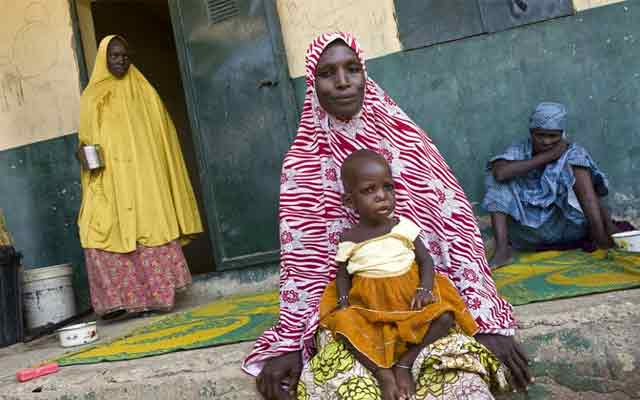
Labour disparity between girls and boys perpetuates gender stereotypes, UNICEF report shows
“The overburden of unpaid household work begins in early childhood and intensifies as girls reach adolescence,” said Anju Malhotra, Principal Gender Advisor at the UN Children’s Fund (UNICEF) in a press release.
“As a result, girls sacrifice important opportunities to learn, grow and just enjoy their childhood,” she stated.
The report, Harnessing the Power of Data for Girls: Taking stock and looking ahead to 2030, underscores that the disproportionate burden of domestic work begins early, with girls between five and nine years old spending 30 per cent more time, or 40 million more hours a day, on household chores than boys their age. The gap grows as girls get older, with 10 to 14 year olds spending 50 per cent more time, or 120 million more hours each day.
The report includes the first global estimates on the time girls spend doing household chores such as cooking, cleaning, caring for family members and collecting water and firewood. It also notes that girls’ work is less visible and often undervalued.
According to UNICEF, too often, adult responsibilities, such as caring for family members, including other children, are imposed on girls. Time spent on chores limits a girl’s time to play, socialize with friends, study and be a child. Additionally, in some countries, collecting firewood and water puts girls at risk of sexual violence.
“This unequal distribution of labour among children also perpetuates gender stereotypes and the double-burden on women and girls across generations,” added Malhotra.
Also detailed in the report is that girls in South Asia, the Middle East and North Africa, between the age of 10 and 14, spend nearly double the amount of time on household chores than that of boys – with those in Burkina Faso, Yemen and Somalia shouldering the most disproportionate burden. At 26 hours every week, girls in Somalia spend the greatest amount of time on household chores.
“Quantifying the challenges girls face is the first critical step towards meeting the Sustainable Development Goal on gender equality and breaking down barriers that confront the world’s 1.1 billion girls,” said UNICEF Chief of Data and Analytics Attila Hancioglu.
In addition to household chores, the report presents data on girl-related issues addressed by the Sustainable Development Goals (SDGs), including violence, child marriage, female genital mutilation and education.
Achieving the SDGs that address these issues and empowering girls with the knowledge, skills and resources they need to reach their full potential not only helps them, but can also drive economic growth, promote peace and reduce poverty.
Photo: UNICEF/Stephen Wandera
Support Our Journalism
We cannot do without you.. your contribution supports unbiased journalism
IBNS is not driven by any ism- not wokeism, not racism, not skewed secularism, not hyper right-wing or left liberal ideals, nor by any hardline religious beliefs or hyper nationalism. We want to serve you good old objective news, as they are. We do not judge or preach. We let people decide for themselves. We only try to present factual and well-sourced news.
Support objective journalism for a small contribution.


