


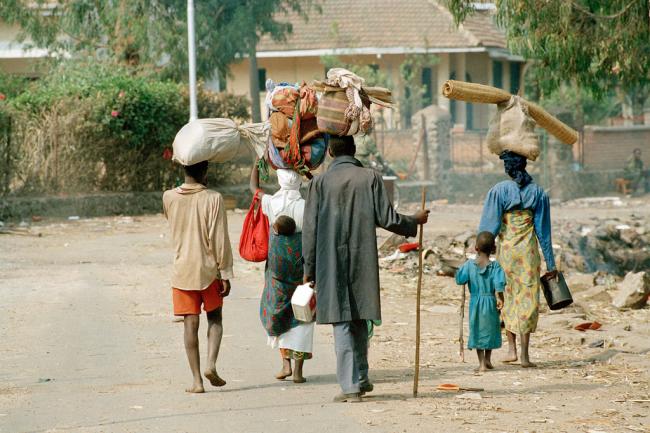
One of Africa's longest-standing refugee situations set to end soon: UN agency
The timetable aims to help former refugees who wish to return to Rwanda by December 2016 and to intensify local integration efforts for former refugees who have developed close links with their host communities by the end of 2017, according to a news release issued by the UN High Commissioner for Refugees (UNHCR).
“This is a beacon of hope, showing that even in today’s world with multiple conflicts and growing displacement, it is possible to resolve refugee situations,” said UNHCR’s Assistant High Commissioner for Protection Volker Türk.
Friday’s meeting in Geneva is part of the concluding phase of a comprehensive strategy to end the Rwandan refugee chapter, which has four components: voluntary repatriation to Rwanda; local integration or legal alternatives in countries of asylum; retention of refugee status for those still in need of international protection; and the cessation of refugee status.
In June 2013, UNHCR recommended that refugee status could be ceased for Rwandans who had fled their country before 31 December 1998.
“African countries have set an example to the world by looking at local integration as a real possibility for tens of thousands of Rwandan former refugees,” Türk observed.
In the wake of the 1994 genocide in Rwanda and the armed clashes in the northwest of the country in 1997 and 1998, more than 3.5 million Rwandans became refugees.
All but 48,000 have now found a solution that allowed them to close the refugee chapter of their life. Most of them returned to Rwanda and others were able to remain in a different capacity in their former country of asylum.
There is also a large group of Rwandans living in eastern Democratic Republic of the Congo. Some 24,000 have been registered, but Government pre-registration estimates stand at nearly 250,000 people.
Biometric registration is expected to be completed by the end of January 2016 and will provide a better idea of how many people are involved and what the best solution would be for them.
Participants called on the international community to support this final phase of the process, to ensure that remaining former refugees can successfully integrate in Rwanda or be productive members of society in their former country of asylum.
UN Photo/John Isaac
Support Our Journalism
We cannot do without you.. your contribution supports unbiased journalism
IBNS is not driven by any ism- not wokeism, not racism, not skewed secularism, not hyper right-wing or left liberal ideals, nor by any hardline religious beliefs or hyper nationalism. We want to serve you good old objective news, as they are. We do not judge or preach. We let people decide for themselves. We only try to present factual and well-sourced news.
Support objective journalism for a small contribution.


