


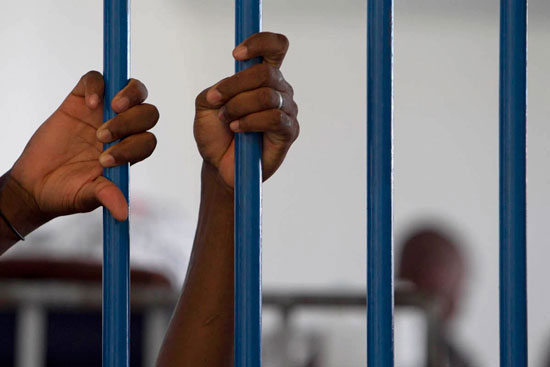
Philippines: UN experts urge country to tackle ‘chronic’ prison overcrowding
The call came at the end of the first visit to the Philippines by the Sub-Committee on the Prevention of Torture (SPT), when the six member delegation presented its confidential preliminary observations to the Filipino authorities.
“We hope, and expect, that the Government of the Philippines will use our report to improve the conditions of people deprived of their liberty, in particular by dealing with the chronic problem of overcrowding in places of detention. We encourage the Government to find solutions to overcrowding as a priority,” Suzanne Jabbour, who headed the SPT delegation, said in a statement.
The SPT also highlighted the importance of the Philippines enacting a law to establish an effective national independent monitoring body, known as a National Preventive Mechanism (NPM) as soon as possible this year.
“We believe that an effective, independent and well-resourced National Preventive Mechanism will be crucial to prevent torture and ill-treatment and to improve conditions of detention through a system of regular visits,” said Jabbour.
She also noted that the Philippines, to meet its treaty obligations, should have set up such an NPM by April 2013 and encouraged the Government to move swiftly to establish such a body this year.
Among the places the experts visited during their 10 days in the Philippines were police stations, pre-trial facilities, prisons, a juvenile rehabilitation centre, correctional institute for women and a psychiatric hospital.
Members of the delegation carried out private and confidential interviews with law enforcement officials, medical staff and persons deprived of their liberty.
The SPT delegation met the relevant authorities, including the Senate, the House of Representatives, members of government departments, and civil society representatives.
Following the visit, the SPT will submit a report to the Government, containing its observations and recommendations on prevention of torture and ill-treatment of persons. As with all other States, the SPT is encouraging the Philippines to make this report public.
The SPT delegation was composed of Suzanne Jabbour, Arman Danielyan, Marija Definis-Gojanovic, Lorevan González Pinto, Milos Jankovic, and Aneta Stanchevska.
Photo: UN Photo
Support Our Journalism
We cannot do without you.. your contribution supports unbiased journalism
IBNS is not driven by any ism- not wokeism, not racism, not skewed secularism, not hyper right-wing or left liberal ideals, nor by any hardline religious beliefs or hyper nationalism. We want to serve you good old objective news, as they are. We do not judge or preach. We let people decide for themselves. We only try to present factual and well-sourced news.
Support objective journalism for a small contribution.


