


 Security Council
Race for the next UN chief heats up — Security Council sparks high-stakes battle!
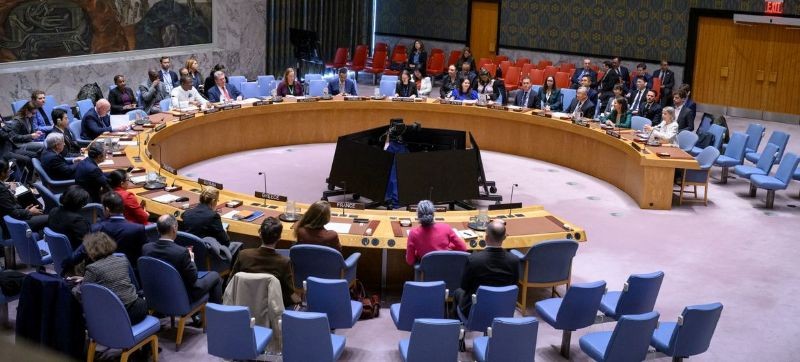
The UN Security Council met on Friday for its annual debate over how it operates – including the process to select the next Secretary-General in 2026.
Governments will soon submit letters nominating candidates to lead the 80-year-old organization, whose top post is traditionally rotated among geographical regions – although all UN chiefs to date have been men.
The Secretary-General is appointed by the General Assembly, the UN’s most representative body, following a recommendation from the Council’s 15 members.
A ‘significant’ responsibility
“As the year draws to a close, the Council approaches one of its most significant responsibilities, namely the process of selection of the next Secretary-General,” said Danish Ambassador Christina Markus Lassen, co-chair of the Informal Working Group on Documentation and Other Procedural Questions.
“In the coming months, the Council will be discussing how it votes, how it engages with candidates, how it informs the wider membership of its progress and its outcomes.”
Russia held the rotating Council presidency in October and Ambassador Vasily Nebenzya said the country “promptly started work for agreement to be reached” on the joint invitation letter with the General Assembly inviting countries to submit their candidates.
“We trust that the document will be adopted in short time to formally start this important process,” he said.
“We trust that the efforts of the Security Council will help to facilitate the selection of the worthiest candidate for the future head of the Secretariat.”
A woman leader
The next UN Secretary-General will serve a five-year term starting in January 2027, after current chief António Guterres of Portugal leaves office.
As no woman has ever held the post, Chile’s representative spoke up for “an open, participatory and gender-inclusive process.”
“After 80 years, the time has come for a woman to lead this organization; a woman who, with her leadership and vision, can provide the multilateral system with the credibility that it needs to respond to the challenges of our time,” he said.
“The principle of regional rotation should be respected as well, and it is the turn of the region of Latin America and the Caribbean to lead this post,” he added.
Productive meetings matter
More than 40 countries participated in the debate on the Council’s working methods, known as Note 507, adopted last December.
How meetings are conducted has become increasingly important over the past year, given the urgent crises on its agenda, said Loraine Sievers, former chief of the office that supports the daily work of the council.
“Of course, people focus primarily on the statements made here and the voting on draft resolutions,” she said.
“But even when Council members and non-member participants demonstrate starkly differing positions, the Security Council and the UN itself can gain credibility or lose credibility depending on how orderly and professionally Council meetings are conducted.”
Support Our Journalism
We cannot do without you.. your contribution supports unbiased journalism
IBNS is not driven by any ism- not wokeism, not racism, not skewed secularism, not hyper right-wing or left liberal ideals, nor by any hardline religious beliefs or hyper nationalism. We want to serve you good old objective news, as they are. We do not judge or preach. We let people decide for themselves. We only try to present factual and well-sourced news.
Support objective journalism for a small contribution.


