


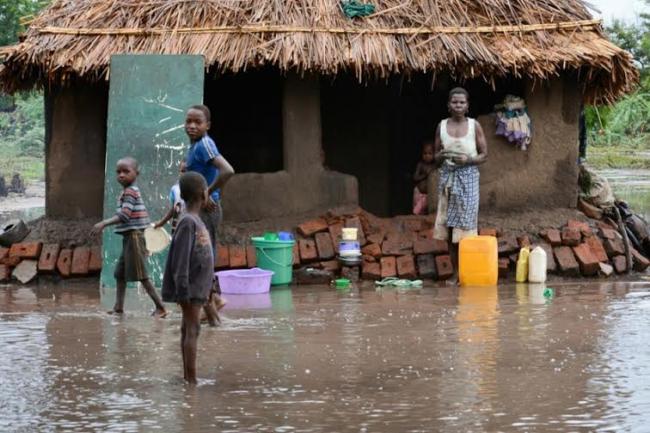
Role of health emerges as vital concern ahead of UN disaster risk reduction conference
The Hyogo Framework for Action (HFA), the outcome of the 2005 World Conference on Disaster Reduction, is the first plan to detail the work required from all different sectors and actors to reduce disaster losses.
Looking to update that landmark agreement at the upcoming Third UN World Conference on Disaster Risk Reduction, world leaders will head to Sendai, Japan, in mid-March to broker the “HFA2” and chart a global course on disaster risk reduction for the coming decade. Sendai lies at the heart of Japan’s Tohoku region, which bore the brunt of the 2011 earthquake and tsunami that led to the Fukushima meltdown.
But while measures to counter the devastation wrought by earthquakes and other natural disasters have formed the bulk of disaster risk reduction efforts until now, health issues are increasingly occupying a prominent space in global discussions.
“The human, social, and economic impact of epidemics such as Ebola, bird flu or HIV/AIDS can be as serious as an earthquake,” the UN agency explained on its website. “Health challenges also go hand in hand with other challenges that increase vulnerability to disasters, such as poverty and climate change.”
The establishment of health protections and awareness, UNISDR continued, can help communities strengthen their ability to weather the most comprehensive and forceful hazards and complement already outlined disaster risk mitigation efforts.
Last week, UN Member States met for a round of negotiations aimed at smoothing out differences in the HR2 draft ahead of the Sendai conference and reiterated four priorities to be detailed in the new framework, including understanding disaster risk; strengthening how institutions manage it; increasing investment in resilience; and enhancing preparedness to make response and recovery more effective.
In addition, delegates identified seven specific targets: reduce the disaster death toll; cut numbers affected by disasters; rein in economic losses; stem damage to critical infrastructure; scale up national risk reduction strategies; increase funding and international cooperation; and improve public access to early warning and disaster information.
Both the priorities and the targets, UNISDR said, would apply to health emergencies as well as other emergencies.
“We’ve never had quantitative targets before, and now we’re getting very close to such targets for economic losses and mortality,” Margareta Wahlström, Head of UNISDR, added. “There’s also an interesting discussion on defining affected people.”
Photo: UNDP/Arjan van de Merwe
Support Our Journalism
We cannot do without you.. your contribution supports unbiased journalism
IBNS is not driven by any ism- not wokeism, not racism, not skewed secularism, not hyper right-wing or left liberal ideals, nor by any hardline religious beliefs or hyper nationalism. We want to serve you good old objective news, as they are. We do not judge or preach. We let people decide for themselves. We only try to present factual and well-sourced news.
Support objective journalism for a small contribution.


