


Science and technology can help save lives: UN official
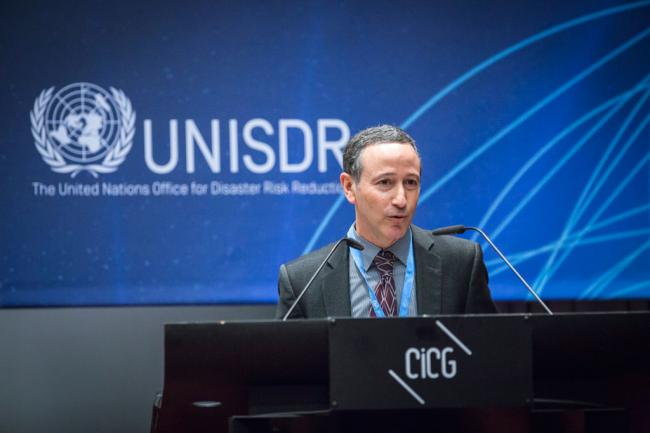
“What motivates these gatherings is the knowledge that we can do a lot more to reduce unnecessary loss of life and livelihoods,” Robert Glasser, the Secretary-General’s Special Representative for Disaster Risk Reduction (UNISDR) said at the opening of the UNISDR Science and Technology Conference.
Such efforts, he pointed out, are of particular significance for the least developed countries, where disasters may not amount to much in terms of absolute global economic losses but can have a crippling impact on long-term sustainable development.
As the first major disaster risk reduction event of 2016, this conference aims at identifying needs and knowledge gaps; exploring new ways of working together and most importantly, making the science available and accessible.
The launch of the UNISDR Science and Technology Partnership, and approving an Agreement on a Science and Technology Road Map for the implementation of the Sendai Framework are two outcomes to be expected at the conclusion of the conference.
“It is most appropriate that this is focused specifically on science and technology,” said Glasser, adding that “the painstaking work of the hundreds of scientists who have contributed to the Intergovernmental Panel on Climate Change’s (IPCC) reports is an outstanding example of the public service and dedication to the greater good which we have come to expect from the global science community.”
Following IPCC’s “convincing and actionable” guidance, Mr. Glasser highlighted three events in this regard.
A UNISDR-backed innovative report in partnership with the Norwegian Government, entitled “Managing the Risks of Extreme Events and Disasters to Advance Climate Change Adaptation,” which integrated for the first time the science on climate change with a disaster risk management perspective.
Another event also taking place is the 2nd Global Platform on Emergency Telecommunications in Kuwait. Organized by the International Telecommunications Union (ITU), it discusses how ICTs can help to disseminate early warnings and reduce mortality in disaster events.
A third one was the International Recovery Forum held in Kobe, Japan, with participants from 37 countries exchanging experience on building back better after disasters, he said.
Looking forward, as the Open Ended Intergovernmental Expert Working Group on Indicators and Terminology for Disaster Risk Reduction will continue its work next month in Geneva, UNISDR will help build the partnerships that can provide scientific support to achieve the Sendai Framework targets on reducing risk and disaster.
Recognizing the value of the partnership, Glasser particularly thanked the host and co-organizers of the current Conference, and encouraged all partners to continue for readiness for cooperation and announce any voluntary funding.
The three-day Conference has been convened to “set the course for further collaboration on the implementation of the Sendai Framework and to support coherence in our understanding of disaster risk reduction across the other relevant international agreements,” said Glasser.
The opening day attracted 700 scientists, disaster risk experts and government representatives.
This is the first such gathering since the Sendai Framework for Disaster Risk Reduction was adopted last year by UN member States with the stated goals of reducing disaster risk and disaster losses with a focus on mortality, numbers of people affected, economic losses and damage to critical infrastructure.
Photo: UNISDR
Support Our Journalism
We cannot do without you.. your contribution supports unbiased journalism
IBNS is not driven by any ism- not wokeism, not racism, not skewed secularism, not hyper right-wing or left liberal ideals, nor by any hardline religious beliefs or hyper nationalism. We want to serve you good old objective news, as they are. We do not judge or preach. We let people decide for themselves. We only try to present factual and well-sourced news.
Support objective journalism for a small contribution.


