


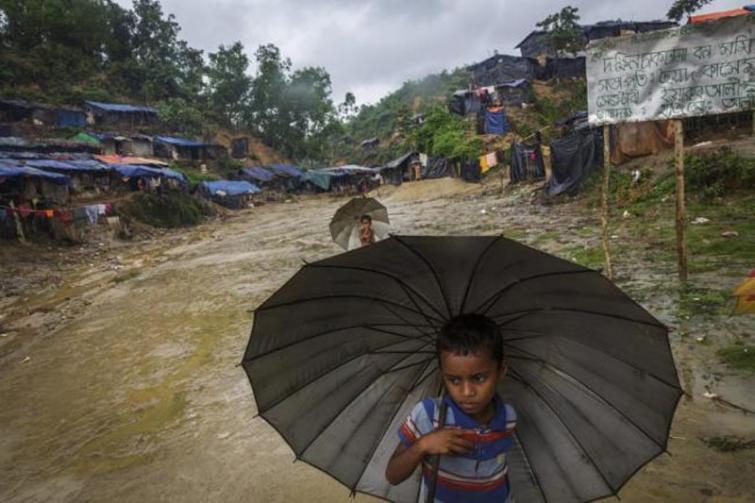
Treating severe COVID-19 patients will be hard in Rohingya camps in Bangladesh : WHO
Moscow/Sputnik/UNI: Valentina Shvartsman Treating severe patients suffering from the COVID-19 lung disease would be particularly challenging in Rohingya refugee camps in Bangladesh due to crowded settings and lack of space for additional health facilities, Catalin Bercaru, a communication officer for the World Health Organization (WHO) country office in Bangladesh, told Sputnik.
Bangladesh, the most densely populated country in the world, also hosts the world's largest refugee camp near Cox's Bazar. On Thursday, local officials reported two confirmed cases of COVID-19 in the district – one is a Rohingya refugee, and the one is a local resident.
"In many countries that are currently facing a large number of confirmed cases within a short period of time, treating patients with severe conditions is a challenge, and this would not be different for the Rohingya camps, given the crowded conditions and scarcity of available land for expanding treatment and isolation facilities," Bercaru said.
According to the spokeswoman, the testing capacity of a field laboratory of Bangladesh's Institute of Epidemiology, Disease Control and Research, which started operating in Cox's Bazar on April 2, is now up to 200 tests per day in the district.
As of late April, about 860,000 refugees live in Cox’s Bazar, most of whom are ethnic Rohingya Muslims forced to flee their homes in neighboring Myanmar amid an army offensive in August 2017. The Myanmar authorities launched an unprecedented violence campaign against the Rohingya after militants, allegedly from this minority group, carried out attacks on police posts in the country's north-western state of Rakhine.
A UN fact-finding mission to the country in 2018 said that there were grounds to charge Myanmar with crimes against humanity and genocide against the Rohingya people. In January, the International Court of Justice ruled that Myanmar must fully implement all measures to prevent the murder, torture or persecution of people based on racial, ethnic or religious grounds.
Support Our Journalism
We cannot do without you.. your contribution supports unbiased journalism
IBNS is not driven by any ism- not wokeism, not racism, not skewed secularism, not hyper right-wing or left liberal ideals, nor by any hardline religious beliefs or hyper nationalism. We want to serve you good old objective news, as they are. We do not judge or preach. We let people decide for themselves. We only try to present factual and well-sourced news.
Support objective journalism for a small contribution.


