


UN review finds vast majority of climate-related disasters
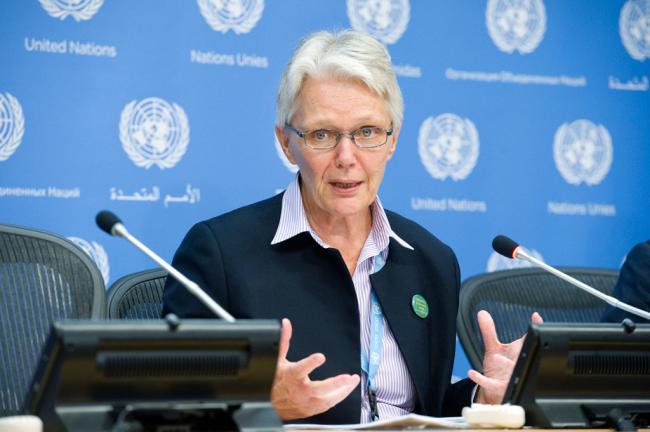
“Despite many successes and greatly improved performance in disaster management, it is sobering to note that 700,000 people have died in disaster events over the last ten years,” Margareta Wahlström, head of the UN Office for Disaster Risk Reduction, said in a press release issued today.
“A total of 1.7 billion people have had their lives disrupted in some way,” Wahlström said.
She said, “It is of great concern that economic losses in major reported disaster events come to $1.4 trillion.”
She went on to explain that while 70 per cent of deaths are caused by earthquakes, climate-related disasters now account for over 80 per cent of all disaster events and contribute enormously to economic losses and short and long-term population displacement triggered by disaster events.
“It is very important that the World Conference on Disaster Risk Reduction which opens on March 14, should provide clear, action-oriented guidance to governments, local governments, the private sector and civil society in general on how best to tackle the underlying drivers of risk such as poverty, climate change, poorly planned urban growth, land use and the decline of protective eco-systems,” Wahlström said.
Thousands of government leaders and civil society representatives will be gathering in the northern Japanese city of Sendai at the Third World Conference on Disaster Risk Reduction from 14-18 March to broker the follow-up to the Hyogo Framework for Action (HFA), and chart a global course on disaster risk reduction for the coming decade.
The Sendai conference is also the first landmark meeting of a particularly crucial year for the United Nations, which is set to lead the global development and climate agenda at a number of major international events.
There will be an international meeting in Paris in December on the adoption of a universal text on climate change; the UN special summit in September for the adoption of a global sustainability agenda; and the financing for development conference in July in Addis Ababa, to renew commitment to global development financing.
Photo: UN Photo/Evan Schneider
Support Our Journalism
We cannot do without you.. your contribution supports unbiased journalism
IBNS is not driven by any ism- not wokeism, not racism, not skewed secularism, not hyper right-wing or left liberal ideals, nor by any hardline religious beliefs or hyper nationalism. We want to serve you good old objective news, as they are. We do not judge or preach. We let people decide for themselves. We only try to present factual and well-sourced news.
Support objective journalism for a small contribution.


