


 US Tariff
UN's top economist warns US tariff delay deepens trade uncertainty
A leading UN trade official warned on Tuesday that the United States’ decision to delay the end of a tariff suspension by a few weeks risks prolonging global uncertainty and undermining long-term investments and commercial contracts.
While the initial 90-day pause on so-called “reciprocal” tariffs offered some relief compared to planned increases of up to 50 per cent, the US imposed a 10 per cent baseline tariff instead, added on top of existing duties. This means many countries – especially developing economies – faced higher costs exporting goods to the US.
The tariff suspension, originally set to expire soon, has now been extended until August 1, further prolonging uncertainty, Pamela Coke-Hamilton, Executive Director of the International Trade Centre (ITC), told reporters at a regular news briefing at the UN Office in Geneva (UNOG).
She warned this move adds to a mounting “dual shock” of rising trade restrictions and deep cuts to development aid, which hit developing countries the hardest.
ITC is a joint United Nations-World Trade Organization (WTO) agency supporting businesses in developing countries.
Real-world consequences
“Economic uncertainty has real-world consequences on countries and sectors,” Ms. Coke-Hamilton said, citing the volatility in gold and precious metals flows as a case in point.
After the US exempted those commodities from the new tariffs, trade volumes surged – with gold imports into Switzerland up 800 per cent year-on-year in May, based on US import data.
Ms. Coke-Hamilton said that since the beginning of the year, ITC has tracked more than 150 new restrictive trade measures globally.
Layered onto existing global trade disruptions since the start of the war in Ukraine, the resulting strain has disproportionately impacted least developed countries (LDCs), which often face the steepest tariffs and the narrowest fiscal space to respond.
A ‘perfect storm’ is brewing
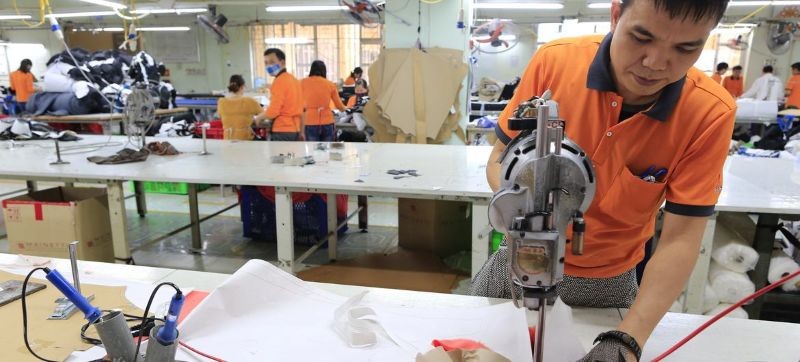
Lesotho, for instance, faces a 50 per cent tariff on apparel exports to the US, threatening its largest industry and tens of thousands of jobs. Viet Nam, though having negotiated a lower tariff, faces a 20 per cent levy – double the current baseline rate – potentially reshaping its $937 million auto and auto-related trade with the US.
Ms. Coke-Hamilton also flagged concerns over cuts in development financing, noting that G7 countries are projected to reduce aid spending by 28 per cent next year – the largest drop in five decades.
“A perfect storm is brewing – just as trade becomes more unpredictable, external support through aid is also shrinking,” she said.
Navigating the challenges
To respond, she urged developing countries to focus on three strategic responses: strengthening regional value chains, investing in value addition to reduce commodity dependence and prioritising small business resilience.
“Stability can come from the ground up,” she said.
“Although uncertainties lie ahead in both the trade and aid landscapes, developing countries can still find ways not only to navigate these challenges, but to take on an active role in bringing about greater stability.”
Support Our Journalism
We cannot do without you.. your contribution supports unbiased journalism
IBNS is not driven by any ism- not wokeism, not racism, not skewed secularism, not hyper right-wing or left liberal ideals, nor by any hardline religious beliefs or hyper nationalism. We want to serve you good old objective news, as they are. We do not judge or preach. We let people decide for themselves. We only try to present factual and well-sourced news.
Support objective journalism for a small contribution.


