July 10, 2026 03:47 pm (IST)

Follow us:


Year of sustained violence across Iraq has hit children hardest, UN says
New York, July 1 (IBNS) The United Nations Children's Fund (UNICEF) on Tuesday said that over the past year in Iraq, it has seen a 75 per cent increase in grave violations against children that include killing and maiming, abduction, recruitment as soldiers, sexual violence, attacks against schools and denial of humanitarian access.
“We could never have predicted that one year on we would be looking at a violent crisis that has affected more than eight million people,” said Colin MacInnes, UNICEF’s Acting Representative in Iraq briefing the press in Geneva from Irbil. This month marks the anniversary of the beginning of the widespread violence across the country.
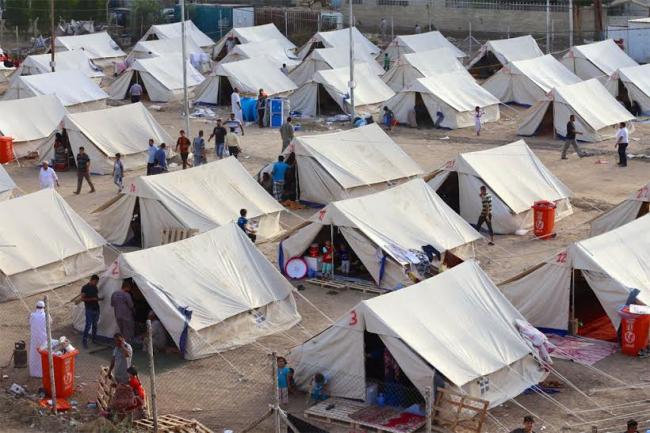
This time last year, many communities in Iraq, particularly in locations such as Mosul and Tikrit, witnessed violence that displaced people on a scale that caught everyone by surprise. It led to the collapse of the healthcare system, the education system the public safety net. The situation for children in particular was desperate. In the 2014-15 school year more than 650,000 children had received no schooling whatsoever and over three million did not attend a regular school cycle.
“For those children not in school and who did not have services the situation continued to worsen,” said MacInnes.
The speed and scope of the crisis has been very severe, he continued, affecting both national and international actors. The ability of families to access even basic items was also harshly impacted. Recently nearly 3,000 people from Anbar were being displaced every week.
“Those people need protection, water, hygiene, shelter and basic food items,” MacInnes explained, adding that by the end of the year, as many as 10 million persons could be affected and be in need of humanitarian assistance.
The funding situation was also fraught with consequences difficult to comprehend.
“Without adequate capital, UNICEF will not be able to provide emergency water to the people who continue to be displaced by violence across the country or help the 650,000 children who missed out on school this year to continue their education when the new school year begins in two months,” continued MacInnes.
Responding to a finance question, MacInnes said “So far, UNICEF has received donor pledges that equalled 20 per cent of its immediate, life-saving needs.” The UN children’s agency was asking for $48 million to provide emergency services throughout the end of the year.
Answering a second funding question, MacInnes asserted: “Nearly 300,000 people have been displaced from Anbar over the past few weeks, most of whom have gone into the Baghdad area. Those people have very acute needs on a daily basis. UNICEF supplies, including water, will be exhausted within three weeks. Probably by August, there will be a severe shortage of water and other supplies for people coming out of Anbar.”
He added that some 40 per cent of displacement in Iraq was in the Kurdish region, and with the ongoing violence and continuing displacement, the ability of national actors to provide assistance was diminishing daily.
A journalist asked what access UNICEF and humanitarian organizations had to areas controlled by the so-called Islamic State of Iraq and the Levant (ISIL), also known as Da’esh.
“It is indeed very challenging to access areas that continue to witness violence,” MacInnes began. “In some cases, humanitarian actors get intermittent access. Direct access is often not possible. UNICEF receives reports of a variety of protection and human rights violations, including from displaced people coming out of those areas, which are very concerning but it was difficult to verify them.”
This time last year, many communities in Iraq, particularly in locations such as Mosul and Tikrit, witnessed violence that displaced people on a scale that caught everyone by surprise. It led to the collapse of the healthcare system, the education system the public safety net. The situation for children in particular was desperate. In the 2014-15 school year more than 650,000 children had received no schooling whatsoever and over three million did not attend a regular school cycle.
“For those children not in school and who did not have services the situation continued to worsen,” said MacInnes.
The speed and scope of the crisis has been very severe, he continued, affecting both national and international actors. The ability of families to access even basic items was also harshly impacted. Recently nearly 3,000 people from Anbar were being displaced every week.
“Those people need protection, water, hygiene, shelter and basic food items,” MacInnes explained, adding that by the end of the year, as many as 10 million persons could be affected and be in need of humanitarian assistance.
The funding situation was also fraught with consequences difficult to comprehend.
“Without adequate capital, UNICEF will not be able to provide emergency water to the people who continue to be displaced by violence across the country or help the 650,000 children who missed out on school this year to continue their education when the new school year begins in two months,” continued MacInnes.
Responding to a finance question, MacInnes said “So far, UNICEF has received donor pledges that equalled 20 per cent of its immediate, life-saving needs.” The UN children’s agency was asking for $48 million to provide emergency services throughout the end of the year.
Answering a second funding question, MacInnes asserted: “Nearly 300,000 people have been displaced from Anbar over the past few weeks, most of whom have gone into the Baghdad area. Those people have very acute needs on a daily basis. UNICEF supplies, including water, will be exhausted within three weeks. Probably by August, there will be a severe shortage of water and other supplies for people coming out of Anbar.”
He added that some 40 per cent of displacement in Iraq was in the Kurdish region, and with the ongoing violence and continuing displacement, the ability of national actors to provide assistance was diminishing daily.
A journalist asked what access UNICEF and humanitarian organizations had to areas controlled by the so-called Islamic State of Iraq and the Levant (ISIL), also known as Da’esh.
“It is indeed very challenging to access areas that continue to witness violence,” MacInnes began. “In some cases, humanitarian actors get intermittent access. Direct access is often not possible. UNICEF receives reports of a variety of protection and human rights violations, including from displaced people coming out of those areas, which are very concerning but it was difficult to verify them.”
Support Our Journalism
We cannot do without you.. your contribution supports unbiased journalism
IBNS is not driven by any ism- not wokeism, not racism, not skewed secularism, not hyper right-wing or left liberal ideals, nor by any hardline religious beliefs or hyper nationalism. We want to serve you good old objective news, as they are. We do not judge or preach. We let people decide for themselves. We only try to present factual and well-sourced news.
Support objective journalism for a small contribution.



Latest Headlines
Ayatollah Ali Khamenei buried at Iran's holiest shrine as Middle East crisis deepens
Fri, Jul 10 2026
Iran's late Supreme Leader Ali Khamenei to be buried in hometown Mashhad after six days of mourning
Thu, Jul 09 2026
'He asked how my Indian cooking was progressing': Scott Morrison after meeting PM Modi
Thu, Jul 09 2026
Third tanker hit in 24 hours in Strait of Hormuz; drone strike raises fresh shipping fears
Tue, Jul 07 2026
Twin blasts rock Syria during Macron’s visit; 18 injured in explosions near Tourism Ministry
Tue, Jul 07 2026
'Death threat' before Melbourne event? Australia probes online post targeting PM Modi ahead of visit
Sat, Jul 04 2026