


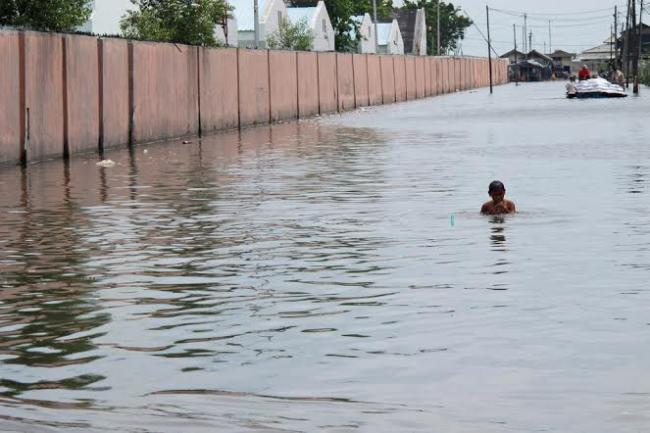
Disaster risk reduction ‘core development priority’ of Asia and the Pacific – UN regional body
ESCAP convened a meeting of senior government officials and experts from 33 countries in Bangkok, Thailand, this week to discuss how to make the Asia-Pacific region more resilient to disasters and endorsed a set of collective recommendations and initiatives.
The backdrop for the fourth session of the Committee on Disaster Risk Reduction was the continued, severe impact of natural disasters, which threatens to roll back hard-won development gains across the region, ESCAP said in a press release.
According to ESCAP’s newly released Asia-Pacific Disaster Report 2015, the region bears the brunt of disasters worldwide, accounting for almost 60 per cent of lives lost and 45 per cent of economic losses between 2005 and 2014.
“Ours is the most disaster-prone region, so building resilience is not a choice, but rather a collective imperative,” ESCAP Executive Secretary Shamshad Akhtar said. “Disaster risk reduction is a core development priority of Asia and the Pacific.”
All government agencies were called on to take on disaster risk reduction as a priority.
Countries in the region also agreed to work more closely together to strengthen technical areas such as drought monitoring and early warning, to enhance the use of space applications, and to promote risk-sensitive development strategies.
The Committee also requested ESCAP to build greater coherence among UN actors in their work on disaster risk reduction through the UN’s Regional Coordination Mechanism in Asia and the Pacific.
Photo: World Bank/Farhana Asnap
Support Our Journalism
We cannot do without you.. your contribution supports unbiased journalism
IBNS is not driven by any ism- not wokeism, not racism, not skewed secularism, not hyper right-wing or left liberal ideals, nor by any hardline religious beliefs or hyper nationalism. We want to serve you good old objective news, as they are. We do not judge or preach. We let people decide for themselves. We only try to present factual and well-sourced news.
Support objective journalism for a small contribution.


