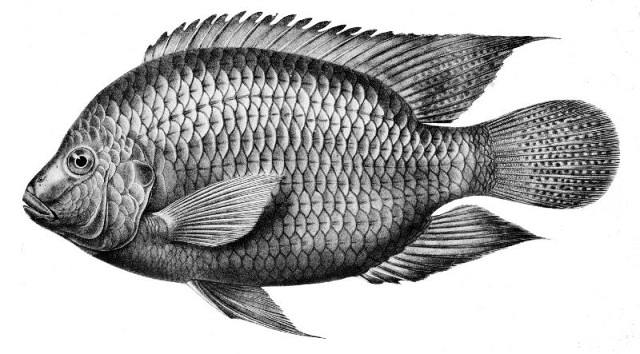
Ten million tonnes of fish dumped every year, says study
The study by researchers with the Sea Around Us – Indian Ocean at UWA and the Sea Around Us, an initiative at the University of British Columbia, reveals that almost 10 per cent of the world’s total catch in the past decade was discarded due to poor fishing practices and inadequate management.
This is equivalent to throwing back enough fish to fill about 4,500 Olympic sized swimming pools every year, according to lead author Dr Dirk Zeller, from UWA’s School of Biological Sciences and senior research partner with the Sea Around Us.
“In the current era of increasing food insecurity and human nutritional health concerns, these findings are important,” Dr Zeller said. “The discarded fish could have been put to better use.”
“Global marine fisheries discards: a synthesis of reconstructed data” was published in Fish & Fisheries.
Fishing vessels discard a portion of their catch because fishing practices damage the fish and make them unmarketable; the fish are too small; the species is out of season; only part of the fish needs to be harvested, such as the Alaska pollock roe, or the vessel caught species that it was not targeting, something known as bycatch.
Professor Jessica Meeuwig, director of UWA’s Centre for Marine Futures said discards also happened because of a practice known as high-grading where fishers continued fishing even after they’d caught fish that they could sell.
“If they catch bigger fish, they throw away the smaller ones; they usually can’t keep both loads because they run out of freezer space or go over their quota,” Professor Meeuwig said.
The study examined the amount of discarded fish over time. In the 1950s, about five million tonnes of fish were discarded every year, in the 1980s that figure grew to 18 million tonnes. It decreased to the current levels of nearly 10 million tonnes per year over the past decade.
The decline in discards in recent years could be attributed to improved fisheries management and new technology, but the researchers believe it’s more likely to be an indicator of depleted fish stocks. As the Sea Around Us 2016 global catch reconstruction paper revealed, catches have been declining at a rate of 1.2 million tonnes of fish every year since the mid-1990s.
“Discards are now declining because we have already fished these species down so much that fishing operations are catching less and less each year, and therefore there’s less for them to throw away,” Dr Zeller said.
The study also shows how industrial fleets move to new waters once certain fisheries decline.
Image: Wikimedia Commons
Support Our Journalism
We cannot do without you.. your contribution supports unbiased journalism
IBNS is not driven by any ism- not wokeism, not racism, not skewed secularism, not hyper right-wing or left liberal ideals, nor by any hardline religious beliefs or hyper nationalism. We want to serve you good old objective news, as they are. We do not judge or preach. We let people decide for themselves. We only try to present factual and well-sourced news.