

At UN summit, plans announced to boost low-carbon, renewable energy in Africa, small islands
A second initiative, also coordinated by the International Renewable Energy Agency (IRENA), aims to deliver a cleaner energy mix for up to 4.7 million people on the frontlines of climate change in so-called small island developing States.
“These initiatives will help reduce emissions and contribute to improved health, wealth and opportunity, and a life of dignity for all,” said Secretary-General Ban Ki-moon, who is hosting as Climate Summit on Tuesday in New York to mobilize resources and generate actions that will reduce emissions and build resilience to climate change.
At the Summit, 19 ministers from Africa endorsed the Africa Clean Energy Corridor (ACEC). If developed as planned, the initiative will advance the development of renewable energy projects used by the Eastern Africa Power Pool and Southern African Power Pool from its current 12 per cent to at least 40 per cent by 2030.
Four-fifths of all electricity in eastern and southern Africa is from gas, oil or coal. The switch away from carbon-bearing fossil fuels would save 2,500 metric tonnes of cumulative carbon dioxide emissions.
The combined effort will also diversify resource availability, improve energy security and foster investment opportunities and job growth.
“Cooperation on renewable energy deployment in the region would reduce generation costs by four per cent and nearly triple electricity supply, transforming the current energy mix of a large portion of the African continent,” according to a press release on the initiative.
Meanwhile, the Small Island Developing States Lighthouse Initiative pledges to mobilize $500 million within five years and deploy 100 megawatts of new solar photovoltaic capacity, consisting of new wind power, significant quantities of small hydropower and geothermal energy, and marine technology.
The Lighthouse Initiative was first introduced earlier this month at the UN Small Island Developing States Conference in Apia, Samoa.
It aims specifically to aid small islands which are disconnected from mainland electricity grids and vulnerable to fluctuations in the supply and cost of fossil fuels.
The initiatives based on identified action areas, were announced at the one-day Summit which Ban has called an “unprecedented and important gathering” of more than 120 Heads of States and Government, business, and civil society.
The Summit aims to raise ambition, mobilize resources, and generate action towards a universal climate deal that will be hammered out next year in Paris.
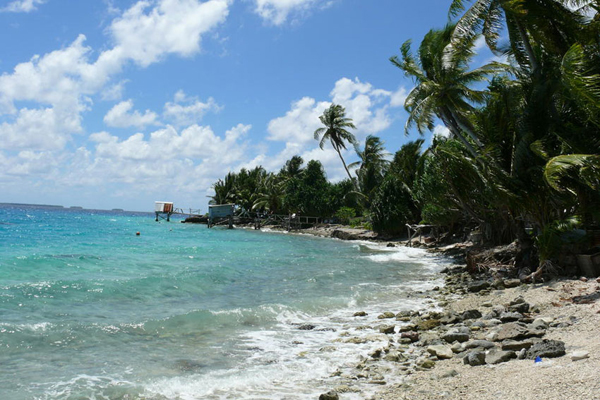
Nukunonu Atoll seaside is one of the regions of the world vulnerable to the impact of the climate change. UN Photo/Ariane Rummery (file photo)
Support Our Journalism
We cannot do without you.. your contribution supports unbiased journalism
IBNS is not driven by any ism- not wokeism, not racism, not skewed secularism, not hyper right-wing or left liberal ideals, nor by any hardline religious beliefs or hyper nationalism. We want to serve you good old objective news, as they are. We do not judge or preach. We let people decide for themselves. We only try to present factual and well-sourced news.
Support objective journalism for a small contribution.