


 Child Mortality
Child mortality hits record low figure of 4.9 million in 2022, shows UN data
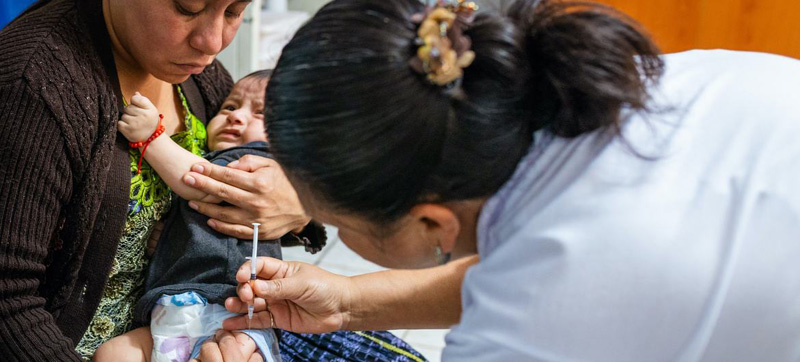
The fight against child mortality has reached an historic milestone the UN announced on Wednesday with latest estimates revealing the number of children dying prematurely before their fifth birthday fell to 4.9 million in 2022.
Figures released by the UN Interagency Group for Child Mortality Estimation (UN IGME) reveal the global under-five mortality rate has declined by 51 per cent since 2000.
Some countries such as Cambodia, Malawi, Mongolia and Rwanda reduced under-five mortality rate by over 75 per cent over the time period.
UNICEF Executive Director Catherine Russell praised the dedicated efforts of midwives, health workers and community health workers, whose commitment has contributed to the remarkable decline.
“Through decades of commitment by individuals, communities and nations to reach children with low-cost, quality and effective health services, we’ve shown that we have the knowledge and tools to save lives,” she said.
The UN IGME was formed in 2004 to share data and enhance methods for child mortality estimates, tracking progress made towards child survival goals. It is led by UNICEF and comprises the World Health Organization (WHO), the World Bank Group and the Population Division at the UN Department for Economic and Social Affairs (DESA).
Long road ahead
Despite these gains, the report noted there is still a long way to go to end all preventable child and teen deaths, as millions continue to die from treatable causes, including preterm birth complications, pneumonia, diarrhoea and malaria.
The majority of these deaths occur in sub-Saharan Africa and southern Asia, highlighting regional disparities in access to quality healthcare.
The report also noted that economic instability, conflicts, climate change and the lingering impact of the COVID-19 pandemic are continuing to undermine progress and exacerbate existing disparities in mortality rates.
“While there has been welcome progress, every year millions of families still suffer the devastating heartbreak of losing a child, often in the very first days after birth,” said Tedros Adhanom Ghebreyesus, WHO Director-General.
“Where a child is born should not dictate whether they live or die. It is critical to improve access to quality health services for every woman and child, including during emergencies and in remote areas.”
Critical frontline responders
Improving access to quality health services and saving children’s lives from preventable deaths requires investment in education, jobs and decent working conditions for health workers to deliver primary health care, including community health workers.
Juan Pablo Uribe, Global Director for Health, Nutrition and Population at the World Bank, emphasized the need to accelerate progress.
“We owe it to all children to ensure they have access to the same healthcare and opportunities, regardless of where they are born.”
Support Our Journalism
We cannot do without you.. your contribution supports unbiased journalism
IBNS is not driven by any ism- not wokeism, not racism, not skewed secularism, not hyper right-wing or left liberal ideals, nor by any hardline religious beliefs or hyper nationalism. We want to serve you good old objective news, as they are. We do not judge or preach. We let people decide for themselves. We only try to present factual and well-sourced news.
Support objective journalism for a small contribution.


